
Clutch Control on Hills: Stop Rolling Back Before It Starts comes down to preparing the car, finding the biting point and moving away with steady control. We’ll take you through each pedal step, explain how to recover if a start goes wrong, and show you how to practise without rushing.
Key Takeaways
| Question | Quick answer |
|---|---|
| How do you find the biting point? | Raise the clutch slowly until the car’s engine note changes and you feel it start to pull. |
| When should you release the parking brake? | After the car is in gear, the clutch is at the bite and the accelerator is providing enough power to move. |
| How much accelerator should you use? | Use steady pressure that suits the car and the slope. A steeper gradient usually needs more power, but there is no pedal recipe that fits every car. |
| What if the car rolls backwards? | Press the clutch down and brake firmly, secure the car with the parking brake, then reset and try again when it is safe. |
| How do you avoid clutch wear? | Use the foot brake or parking brake to hold the car still, rather than balancing it on the clutch. |
| Where can you learn hill starts with an instructor? | Our Driving Lessons Manchester are tailored to your experience and learning pace. |
Why hill starts need calm clutch control
A hill start asks you to coordinate the clutch, accelerator and brake while the slope is pulling the car backwards. In a manual transmission car, the clutch connects engine power to the wheels, so releasing it too quickly or without enough power can cause a jerk, a stall or rollback.
You do not need to rush through the pedals. Set the car up first, keep it secure, then move away when you feel it is ready.
Our patient, specialist instructors offer manual driving lessons in Manchester in modern dual-controlled cars. We start beginners in a quiet area so you can get used to the controls, then build your skills at a pace that suits YOU.
How to perform a manual hill start step by step
Use this sequence on a safe, quiet slope while practising with your instructor. The parking brake gives you time to find the bite and prepare the car without needing to keep your foot on the brake.
- Secure the car. Press the foot brake, apply the parking brake and select first gear. Check your mirrors and surroundings, and signal if needed before moving into traffic.
- Prepare the clutch and accelerator. Keep the clutch down and bring the accelerator up gently. Use steady pressure rather than a sudden rev.
- Find the biting point. Raise the clutch slowly until the engine note changes and you feel the car begin to pull against the parking brake.
- Check that the car is ready. Hold the clutch near the bite, keep the accelerator steady and check the road is clear. The car should feel ready to move forward, not as if it is straining or losing power.
- Release the parking brake. Lower or release it smoothly once the clutch and accelerator are ready to move the car. Do not release it early and hope the car will hold itself.
- Move away smoothly. Let the clutch rise gradually as the car moves forward, and add accelerator smoothly if the car needs more power. Once you are moving, release the clutch fully rather than holding it at the bite.
The exact feel varies between cars. Clutch travel, engine response, vehicle load and gradient all affect how much accelerator you need, so learn the feel of the car you are driving rather than memorising a fixed pedal position or engine-rev figure.
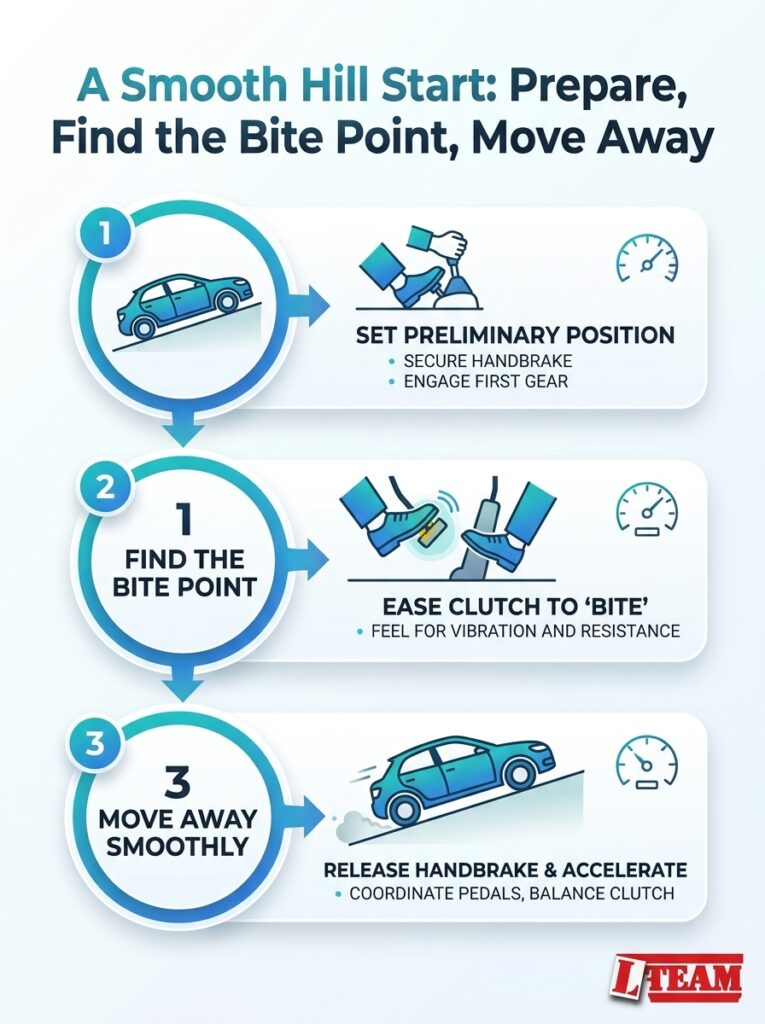
A step-by-step guide to a smooth hill start: prepare, find the clutch bite point, and move away without rolling back.
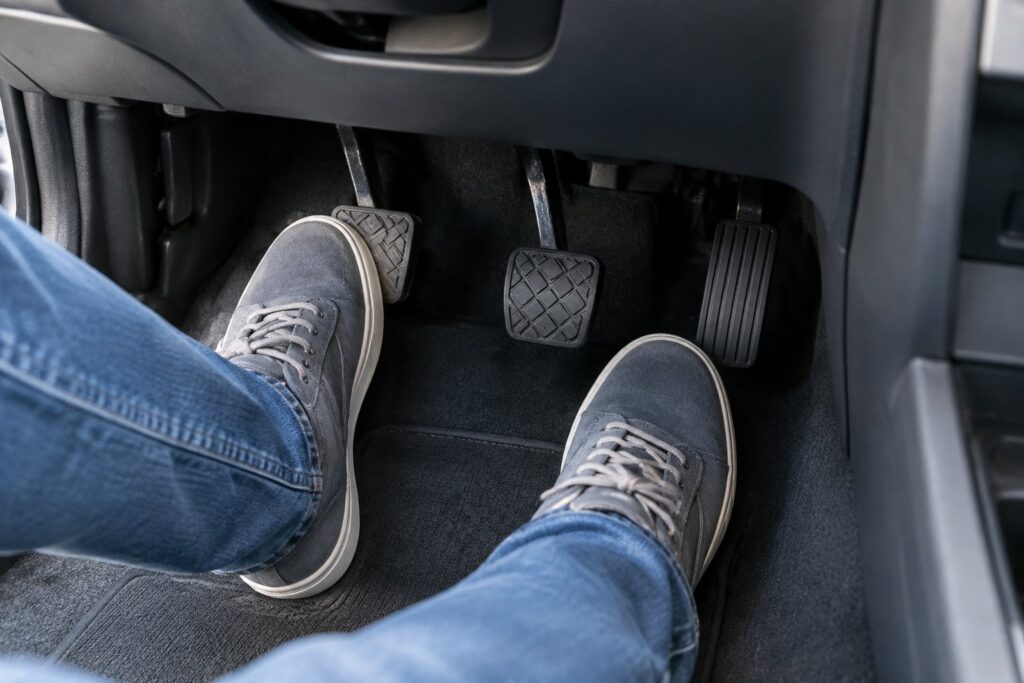
How to recognise the clutch biting point on a slope
The biting point, also called the friction point, is where the clutch starts transferring engine power to the wheels. You can often feel a slight pull through the car, hear the engine note change or notice the front of the car lift slightly.
Find it by raising the clutch slowly, not by lifting your whole foot in a quick movement. The car’s response is your guide: pause when you feel it begin to engage, keep the car secured with the parking brake, then prepare to move.
Why does your car jerk when you release the clutch? It usually happens because the clutch is coming up too quickly, or the engine does not have enough power for the slope. Ease the clutch more gradually and keep the accelerator steady; if the car shudders, pause and settle the pedals rather than making a sudden correction.
Do not try to hold the car still by balancing it on the clutch. That makes the clutch slip and creates unnecessary wear, so use the foot brake or parking brake whenever you need to wait.
Did You Know?
There are 4 parts to the driving test.: Parts of the driving test, UK car driving test
Source: GOV.UK
When to release the parking brake
Release the parking brake only when the clutch is at the biting point, the accelerator is providing enough power and you are ready to move. The car should feel as if it wants to go forward; if it does not, keep it secured and adjust calmly.
Releasing the handbrake before the car is ready is a common cause of rollback. If you use an electronic parking brake, its operation can vary between vehicles, so learn its controls and release behaviour before relying on it during a hill start.
Keep your attention on the road, not just on the pedals. Check for pedestrians, cyclists and approaching vehicles before you release the brake, and move away only when you have a safe gap.
How much accelerator to use on a hill
Use enough accelerator to help the engine move the car uphill, with smooth pressure rather than a sudden burst. A steep gradient or a heavily loaded car may need more power than a gentle slope, but the right amount depends on the vehicle.
Too little accelerator can make the engine struggle or stall as the clutch engages. Too much, applied abruptly, can make the car surge, so make small adjustments and listen to the engine as you coordinate the pedals.
Do not hold the clutch at the bite for longer than you need to move away. Once the car is moving, continue lifting the clutch smoothly and bring your foot fully off it.
What to do if the car starts rolling backwards or stalls
If the car begins rolling backwards, press the clutch down and brake firmly to stop the movement. Once stationary, apply the parking brake and take a moment to reset before trying again.
If the engine stalls, stay calm. Press the clutch down, use the foot brake to hold the car and apply the parking brake; then select neutral and restart when the car is secure and it is safe to do so.
After restarting, check your surroundings again and repeat the steps from the beginning. Do not try to rescue a stalled start by releasing the parking brake in a hurry or lifting the clutch sharply.
A calm reset is safer than a rushed second attempt. Everyone’s journey to test is different, but THE L TEAM DRIVING SCHOOLS MISSION is to get you there ASAP/SAFE for YOU.
Starting on a steep hill, at a junction or in traffic
On a steeper gradient, the car needs enough power to move forward against gravity. Take extra time to find the bite, use smooth accelerator pressure and keep the parking brake applied until the car is ready.
At an uphill junction, make your observations before preparing to move. Keep the car secured while you wait for a safe gap, then coordinate the clutch and accelerator before releasing the brake.
In uphill traffic, use the brake or parking brake to hold position when traffic stops. Do not creep forward by slipping the clutch for an extended time, and leave a safe gap so you have room to move without rushing if traffic begins to flow.
If a driver behind you is close, do not let that pressure make you release the brake before the car is ready. Keep control, wait for a safe opportunity and move away smoothly.
Did You Know?
You’ll drive for around 35 minutes.: Driving duration, Driving test: cars
Source: GOV.UK
How hill starts differ in automatic cars and with hill-start assist
An automatic car does not require clutch control from the driver. Keep the foot brake applied while stationary, select Drive when ready and release the brake with controlled accelerator pressure; the car’s response will depend on its design and the slope.
Hill-start assist can hold the brakes briefly while you move your foot from the brake to the accelerator. It is an aid, not a replacement for checking the slope, controlling the car or learning how that particular vehicle behaves.
Automatic cars and hill-start assist can still roll backwards. If you are unsure how the system works, practise in a safe place with an instructor before relying on it in traffic.
How to practise hill starts safely
Build confidence in stages, starting on a quiet, gentle slope with an instructor. Practise securing the car, finding the bite and moving away smoothly before trying a steeper gradient.
- Begin somewhere quiet, away from live traffic and busy junctions.
- Repeat the same controlled sequence until the pedals feel familiar.
- Progress to a steeper slope only when you can move away calmly.
- Practise in the car you will drive, because clutch and accelerator response vary between vehicles.
Our aim is for you to pass as soon as you can and for us to get recommendation work! This is done by having an INDIVIDUAL SYLLABUS written for YOU once we have assessed how quickly you pick things up.
Frequently Asked Questions
Can I perform a hill start while reversing uphill?
Yes, the same need for smooth clutch control applies, but select reverse and take extra care with your observations because visibility is more restricted. Practise the manoeuvre with an instructor in a quiet place before attempting it near traffic.
Why do my engine revs rise but the car barely moves uphill?
If the engine revs rise without the car gaining speed, the clutch may be slipping or the car may not be receiving power in a way that moves it forward. Avoid holding the bite and adding more revs; stop safely and ask an instructor to help identify what is happening.
Can I hill start with a full car or extra passengers?
Yes; practise with the passengers already seated so you can feel how the car responds to the added weight.
Do electric cars need clutch control on hills?
Most electric cars do not have a clutch pedal because they use an electric drivetrain rather than a manual clutch. Their hill-hold and accelerator behaviour varies, so learn the vehicle’s controls before using it on a slope.
Is it normal for the engine note to change at the biting point?
Yes; it can be a normal sign that the clutch is engaging.
Can a hill start be assessed on the UK driving test?
Yes. Moving off uphill may be assessed during the practical test as part of normal driving, though the exact situation depends on the route and traffic. The examiner is looking for safe observations and controlled movement; use the method that lets you keep the car secure and move off safely.
Patient Practice
Clutch Control on Hills: Stop Rolling Back by preparing the car, holding it securely and finding the biting point before you release the parking brake. Keep the accelerator steady, bring the clutch up smoothly and use the brake to reset if the start does not go to plan.
With patient practice, hill starts become familiar rather than nerve-induced. We’ll help you build confidence and calm, learn the feel of your car and work towards passing ASAP/SAFE.
Need to book a Driving Lesson?
Contact us Now
Tel: 03334049786