
It can feel like only the best drivers pass, but the truth is brutal, more than half of learners fail on their first attempt, with the DVSA pass rate sitting at 48.2%. If you are heading into your test in the Manchester area, knowing the Common Reasons for Failing the Practical Driving Test is exactly how you calm your nerves and drive test-ready.
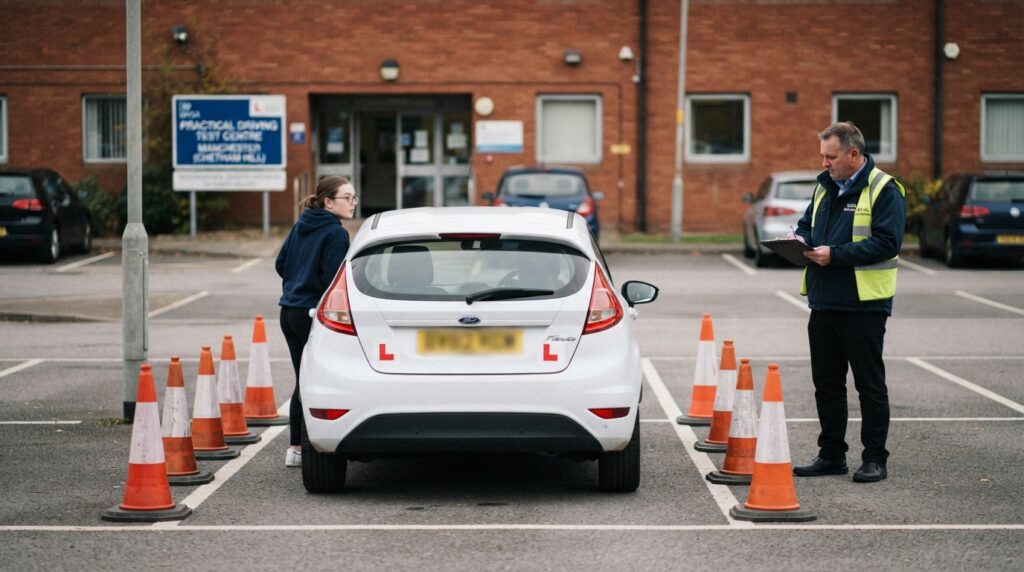
Key Points to Stop Common Reasons for Failing the Practical Driving Test Before They Happen
| Fault type | What goes wrong | What you do instead |
| Observations | Missed checks at junctions and busy gaps. | Use a consistent routine, eye contact and MSM. |
| Mirrors and signals | Late mirrors, unclear signalling. | Practise timing so your mirrors, signal, then manoeuvre. |
| Control and manoeuvres | Clumsy parking, rough hill starts, errors in car parks. | Repetition until it is smooth, accurate and calm. |
| Nerves and speed | Overthinking, rushing, or freezing at key moments. | Slow down and take a proper look at every junction. |
| Poor preparation | Not training the bits most likely to be tested. | Build a plan around your weak points with an INDIVIDUAL SYLLABUS. |
- We start with the cause. Everyone fails for different reasons, but the pattern is usually the same.
- We fix it with routines. MSM, observation habits, and timing make the test feel repeatable.
- We prep the manoeuvres. Driving manoeuvres prepare you for situations you cannot avoid as a licensed driver.
- We keep you calm. A calm, rested brain makes far fewer panic-driven mistakes than a tired, anxious one.
- We match practice to YOUR test day. Whether you need Manchester Driving Lessons or an intensive crash course, the goal stays PASS and SAFE.
If you want a direct checklist of what testers look for, start with Top 10 Reasons People Fail Their UK Driving Test (and How to Avoid Them).
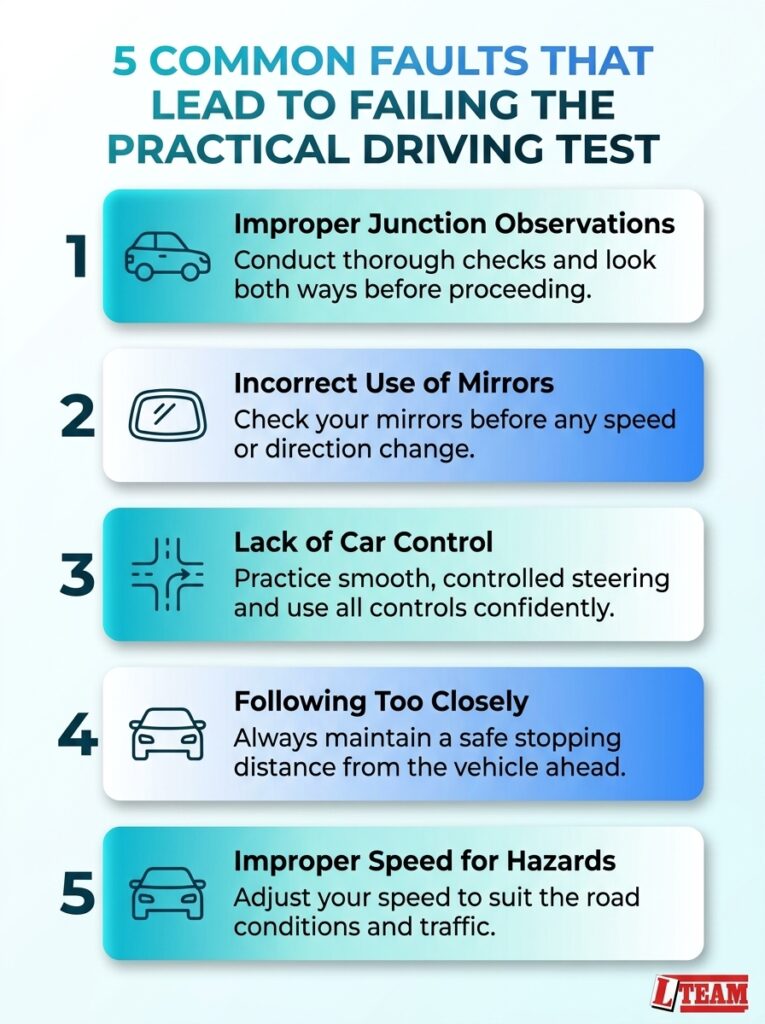
1) Not doing proper observations at junctions (the big one)
This is one of the most common reasons for failing the practical driving test because it is where “I thought it was clear” turns into a serious fault. The examiner is not just watching your steering, they are watching your judgement at junctions, roundabouts, and when you merge into traffic.
In our Manchester area lessons, we see the same issue again and again, learners look, then rush the next decision. The fix is simple and practical, you slow down and take a proper look at every junction.
- Before you move off, pause and check mirrors, then do a quick scan for pedestrians and cyclists.
- At junctions, do not “glance”, do a deliberate observation, then commit.
- When you are waiting, keep your eyes moving, so your next move is already planned.
If you want to strengthen the routine, practise with intention. Our aim is for you to pass as soon as you can and for us to get recommendation work, so we focus on the exact faults that cost tests.
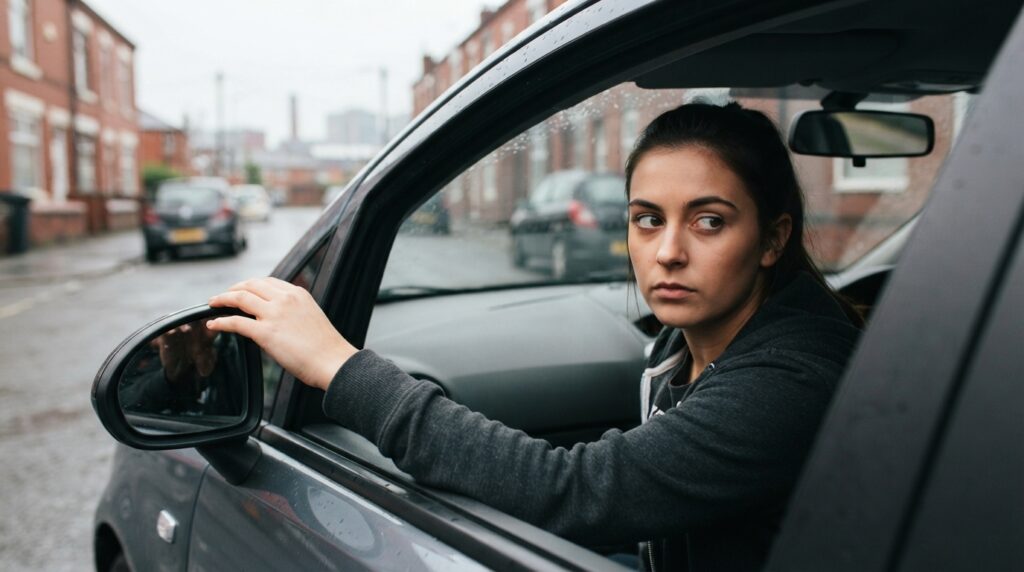
2) Using mirrors poorly or at the wrong time
Mirrors only help you if you use them at the right moment. One of the Common Reasons for Failing the Practical Driving Test is when mirrors are late, forgotten, or not checked with purpose.
This is done by having a consistent routine, not by “remembering harder”. We get you to trust a timing pattern so your brain does not scramble during nerves.
Our practical rule: check mirrors, signal clearly, then manoeuvre with control. That is it. The calm part comes from knowing what comes next.
- If you are changing speed, check mirrors before you commit.
- If you are turning left or right, make sure your mirrors match the direction and timing.
- If you miss one mirror check, do not panic, reset your routine immediately and carry on SAFE.
If you struggle with the sequencing, you will love how simple “MSM” feels once it is built into your driving. For full guidance on steering and manoeuvres tested in the practical, see Driving Test Manoeuvres Explained.
3) Manoeuvres that are accurate in lessons but fall apart on test routes
Car parks, hill starts, roundabouts, and parking exercises are exactly where nerves turn into clumsy control. Another key Common Reasons for Failing the Practical Driving Test is when manoeuvres are not steady, not positioned well, or not completed with clear control.
One bad second is usually not the real problem. The real problem is repetition, or rather, not enough of the right repetition for YOUR weak point.
Did You Know?
A pass rate gap of 30 percentage points exists between the best and worst performing driving test centres.
Source: Driving Theory Test
This matters because Manchester area roads and test routes have their own rhythm. If you only do “general driving”, the manoeuvre timing can still feel unfamiliar on the day.
When we plan your lessons, we help you practise manoeuvres on routes that resemble your test environment. That way, your hands and your eyes know what to do.
- Practise hill starts until you can do them without thinking.
- Practise parking entries, not just the parking itself.
- Practise observations during manoeuvres, not just steering.
If you are not sure what you will be asked to do, Driving Test Manoeuvres Explained breaks it down in a way you can rehearse.
4) Getting the “Show Me / Tell Me” safety checks wrong
Some Common Reasons for Failing the Practical Driving Test happen even when you drive well, because you miss a safety check at the start of the journey. The “Show Me / Tell Me” part is there for a reason, it tests whether you understand safety basics, not whether you can memorise words.
Our approach is straightforward. We train the checks so they become natural, and we practise your answers until you can deliver them calmly.
Want to revise the checks in a simple way? Start with Show me / Tell me – L Team Driving School.
- Practise how you explain things, clearly and confidently.
- Practise showing safely, without rushing or fidgeting.
- Do not guess, if you are unsure, our lessons are designed to build the understanding first.
When “safety checks” stop being stressful, you free up mental energy for observation, positioning, and speed control.
5) Speed, positioning, and control issues that feel minor until they add up
Many learners think failure comes from one big mistake. In reality, it is often control and speed habits that build into serious faults. One of the most common reasons for failing the practical driving test is driving that is not smooth, not properly positioned, or not controlled for the road conditions.
This is not about driving slowly to be safe. It is about matching your speed to the road, your visibility, and the traffic around you.
- Position early: get into the correct lane before you need to, not after.
- Adjust speed early: do not wait until you are too close to react.
- Keep control steady: avoid jerky acceleration, harsh braking, and last-second corrections.
We also make sure you can handle normal test moments, like stopping at the right point, moving off smoothly, and maintaining control through bends and junction approaches.
If you want an example of how structured practice works, explore Reasons to Take Driving Lessons in Manchester.
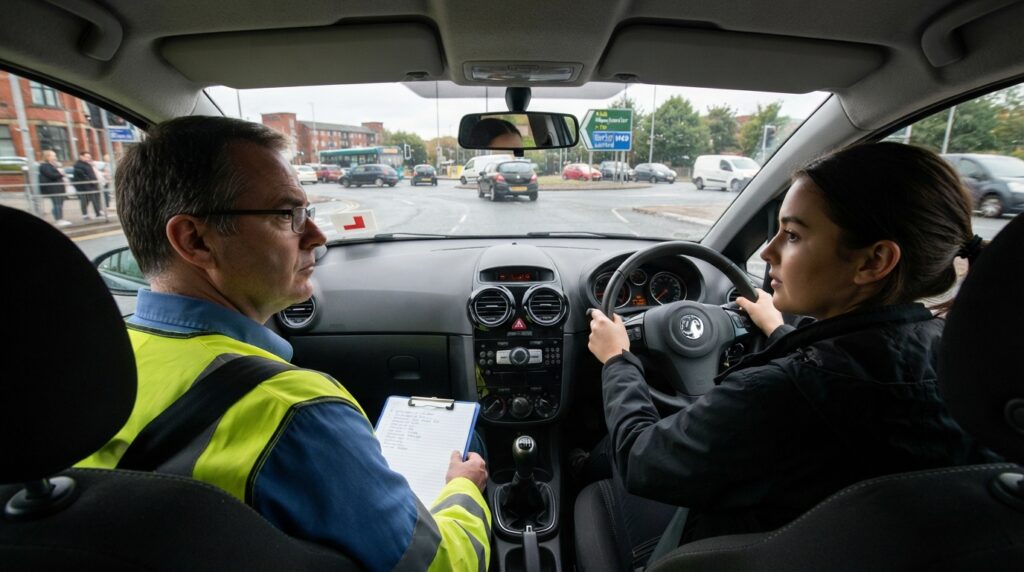
6) Not training the manoeuvres and routines that your test routes actually demand
Even skilled learners can fail because they were never coached for the specific “what happens next” on test routes. If you only practise the same few streets, your brain has to improvise at the wrong time, during nerves.
Our patient, specialist instructors offer Driving Lessons Manchester built around confidence and calm. That means you practise the moves, in the order, with the observation rhythm you will need on the day.
This is done by having an INDIVIDUAL SYLLABUS written for YOU once we have assessed how quickly you pick things up. You do not get a generic lesson sequence, you get a plan.
- We identify the exact Common Reasons for Failing the Practical Driving Test that apply to YOU.
- We practise the fixes repeatedly until they feel automatic.
- We keep lessons targeted so you are test-ready, not just “improving”.
So whether you are learning from scratch or you have had lessons before, our aim is the same, PASS and SAFE.
7) Test day nerves, rushing, and panic-driven mistakes
A calm, rested brain makes far fewer panic-driven mistakes than a tired, anxious one. That is why nerves are one of the Common Reasons for Failing the Practical Driving Test even when your driving skills are good.
When nerves hit, learners often do the same things, they rush junctions, forget mirrors, or overthink manoeuvres. The result is minor faults that snowball.
Did You Know?
If you are sitting on a busy waiting list, you may face 3 to 6 months of delays, which adds pressure to pass.
Source: Zego
We fix nerves with preparation you can feel. If your lesson plan includes observation routines, repeated manoeuvre practice, and confidence building, the test becomes a checklist you can manage.
For extra reassurance and practical coping strategies, read Top tips for dealing with driving test day nerves, stay calm and pass with confidence.
- Arrive calm, rested, and on time, not rushed.
- Reset immediately after any mistake, do not dwell.
- Use the same observation rhythm you practised in Driving Lessons Manchester.
8) Choosing the wrong learning approach, or leaving key gaps too late
Another reason you might see on the list of Common Reasons for Failing the Practical Driving Test is learning too slowly for your test date, or learning without focusing on your weak points. That is when you can feel confident in one area and surprised in another.
Our service is designed around speed where it is safe, ASAP/SAFE. We match the service of a national school without the hefty prices, so you relax and learn at your own pace.
If you need progress quickly, an intensive course can help. See Reasons Why an Intensive Driving Course Will Help You.
- An intensive course keeps everything fresh in your mind.
- It gets you on the road faster, often in 5 to 7 days.
- You practise test-ready routines, not just “more driving”.
That is also why we look at your individual learning pace and build an INDIVIDUAL SYLLABUS. It is not about doing more, it is about doing the right things at the right time.
How to use this list to practise smarter (not harder)
So, what do you do with Common Reasons for Failing the Practical Driving Test now that you know them? You turn them into a rehearsal plan.
- Pick the top 2 faults that match your driving. If it is junction observations and mirrors, focus there first.
- Practise the routine, not the moment. MSM, observation rhythm, signal timing, then control.
- Do manoeuvres with the same calm target. accuracy, control, and clear observation.
- Train the “Show Me / Tell Me” checks until they feel normal.
- Finish lessons with test-style repetition. short sessions that mimic test decision-making help your brain stay relaxed and comfortable environment.
Whether you book Driving Lessons Manchester or you want an intensive crash course, we keep it practical. Our aim is for you to pass as soon as you can and for us to get recommendation work.
Remove the Common Reasons for Failing the Practical Driving Test from your driving
The Common Reasons for Failing the Practical Driving Test are not mysteries, they are repeat patterns, observations, mirrors and signalling, manoeuvres, safety checks, control, and nerves. When you train these areas with confidence and calm, your test day feels less like a surprise and more like a plan.
That is what Driving Lessons Manchester is built for in our world, practical coaching, an INDIVIDUAL SYLLABUS, and targeted practice on the routines that matter. We go ASAP/SAFE for YOU, so you can drive test-ready and pass with a clear, SAFE head.
Frequently Asked Questions
What are the most common reasons for failing the practical driving test?
The Common Reasons for Failing the Practical Driving Test usually come down to observation at junctions, using mirrors and signals at the right time, and losing control during manoeuvres. Nerves also play a big part, because they push you into rushing or forgetting routines when you need them most.
How do Driving Lessons Manchester help with common driving test faults?
Driving Lessons Manchester helps because you practise the same decisions and routines you will meet on local test routes. We build your training around the exact common reasons for failing the practical driving test that fit your driving, then rehearse them until they feel automatic.
Is it worth booking an intensive crash course to avoid failing the practical driving test?
Yes, if your issue is you need test-ready consistency quickly, an intensive course keeps everything fresh in your mind. That reduces nerves, improves control, and gives you more repetition on the faults that cause failure, like manoeuvres and observation routines.
What does “Show Me / Tell Me” have to do with failing the practical driving test?
It matters because safety checks are part of the practical assessment, and missing or misunderstanding them can cause serious problems even if your driving is otherwise strong. We use dedicated show-me and tell-me guidance so you can answer calmly and correctly.
How can I stop nerves from causing me to fail the practical driving test?
A calm, rested brain makes far fewer panic-driven mistakes than a tired, anxious one. The key is to rehearse observation habits, mirrors and signalling timing, and manoeuvre control so your mind does not have to invent answers under pressure.
How many lessons do I need to address the common reasons for failing the practical driving test?
It depends on how quickly you pick things up, which is why we create an INDIVIDUAL SYLLABUS after an assessment. Some learners need more repetition on mirrors and junction observation, while others need extra focus on manoeuvres and “Show Me / Tell Me”.
Do I need to practise manoeuvres if I’m already comfortable driving?
Yes, because manoeuvres are a specific part of the test process and they trigger common reasons for failing the practical driving test when control or observation slips. Manoeuvres prepare you for situations you cannot avoid as a licensed driver, and practise makes them accurate and smooth on the day.
Need to book a Driving Lesson?
Contact us Now
Tel: 03334049786