
Taking your UK driving test can feel stressful, especially when you know that more than half of learners don’t pass on their first attempt. The most common reasons people fail include poor observation at junctions, not checking mirrors properly, incorrect road positioning, ignoring traffic signs and road markings, and problems with speed control. Understanding these mistakes before your test gives you a clear advantage.
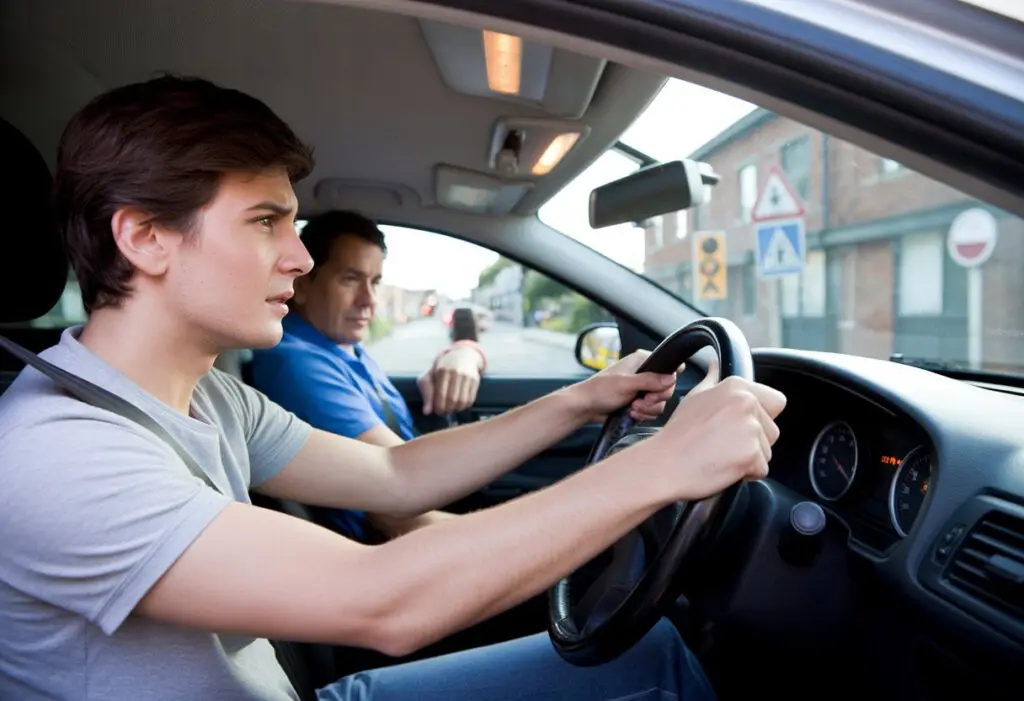
You don’t need to be a perfect driver to pass your car driving test. You just need to show the examiner that you can drive safely and follow the rules. Many driving test failures happen because of simple errors that you can avoid with proper preparation during your driving lessons. The good news? Structured lessons with one of Manchester’s highest-rated driving schools significantly reduce the risk of every failure point on this list.
This guide breaks down the top reasons why people fail and shows you exactly how to fix these problems. You’ll learn what examiners look for at junctions and roundabouts, how to use your mirrors correctly, when to check your blind spots, and how to maintain proper control of your vehicle. If you’d also like a full rundown of the test format itself, see our guide on what to expect on your practical driving test. By the time you finish reading, you’ll know what to practise before test day so you can pass the driving test with confidence.
Observation Issues at Junctions and Roundabouts
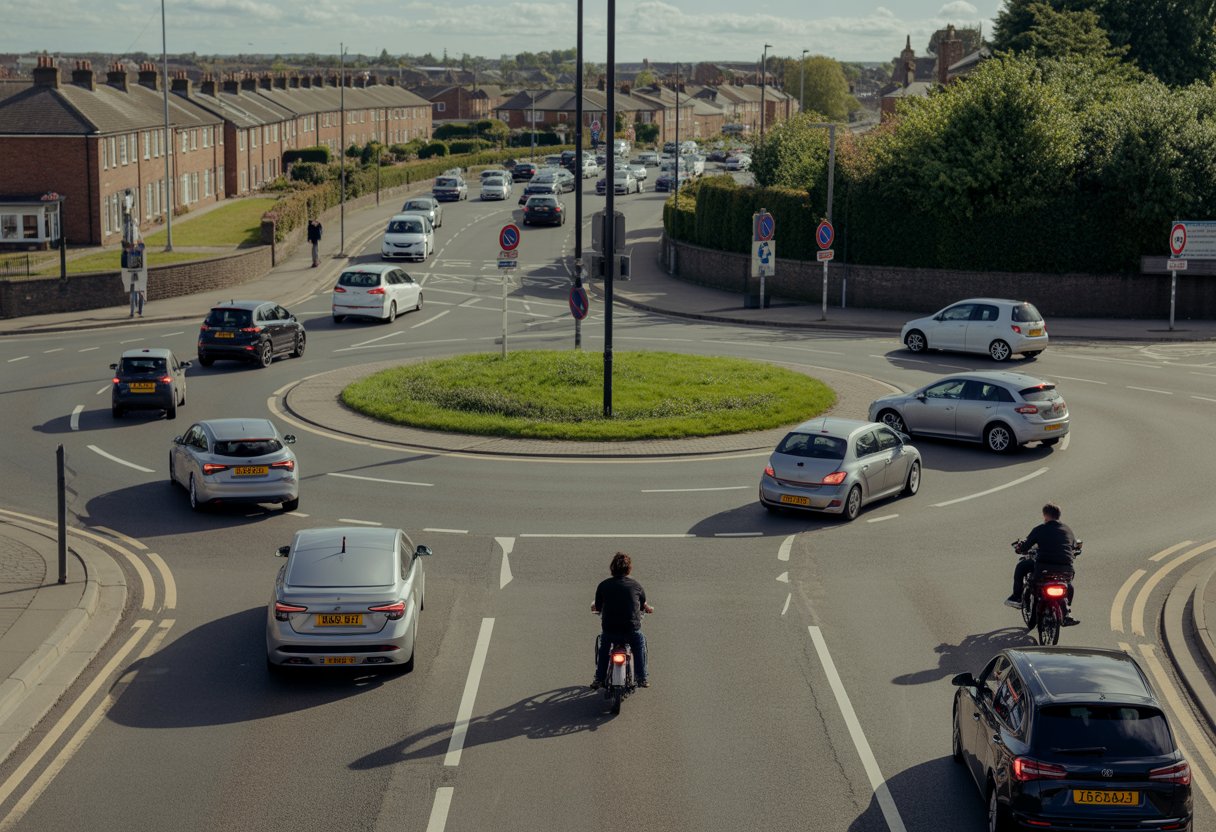
Poor observation skills cause more test failures than any other mistake. Many learners look but don’t actually see what’s happening around them, whilst others fail to check at the right moment or miss blind spots completely.
Missing or Ineffective Observations at Junctions
You need to make full observations before entering any junction. This means checking left, right, and left again at the correct time.
Looking too late is a common problem. If you’re already moving into the new road when you check, your observations won’t help you spot dangers. You must complete your checks whilst you still have time to stop safely.
Some learners make no effective observations at all. This forces other drivers to brake suddenly or makes the examiner use the dual controls. If you don’t recognise a crossroads and drive straight through without looking, you’ll fail immediately.
Common junction observation mistakes:
- Checking mirrors but not looking left or right
- Making observations too early or too late
- Focusing only on one direction
- Not checking for parked vehicles or obstructions
- Failing to look left when turning left onto busier roads
At T-junctions, you must judge whether you have enough time to pull out safely. Don’t move if you’re unsure about the speed of approaching traffic.
Misjudging Speed and Safe Gaps at Roundabouts
Entering a roundabout when traffic is approaching from the right causes immediate failure. You must wait until you have a safe gap.
Many learners check their mirrors but still pull out too early. They see the vehicle but don’t judge its speed correctly. This forces other drivers to slow down or brake hard.
When you exit a roundabout, you need to check your mirrors before moving left. Missing this check means you might cut across vehicles on your left side. On multi-lane roundabouts, you must check before changing lanes. Never try to move when a vehicle is directly alongside you.
Essential roundabout checks:
- Right side before entering
- Mirrors before changing lanes
- Left mirror before exiting
- Blind spot when necessary
At mini-roundabouts, follow the road markings carefully. Poor steering combined with weak observations creates dangerous situations.
Not Looking for Cyclists and Pedestrians
You must specifically look for vulnerable road users, not just cars. Cyclists and pedestrians are harder to spot because they’re smaller and move differently.
Check your blind spots every time you move off or change direction. Cyclists often sit in these blind spots, especially on your left side. A quick mirror check won’t show them.
When turning left at junctions, look for cyclists coming up on your left. They might be travelling faster than you expect. At roundabouts, watch for cyclists in all lanes, not just the left one.
Pedestrians crossing side roads need your attention too. Look into the road you’re turning into, not just at the main road traffic. Don’t assume pedestrians will wait for you.
Failing to Observe When Joining Dual Carriageways
Slip roads require different observation skills. You need to match the speed of traffic already on the dual carriageway whilst checking if it’s safe to merge.
Many learners focus only on accelerating and forget to look. You must make rear observations using your mirrors and check your blind spot before moving into the carriageway. Don’t just indicate and hope other drivers will let you in.
Build up your speed on the slip road so you can merge smoothly. If you enter too slowly, you create a dangerous speed difference. Give way to traffic already on the main carriageway – they have priority.
Look well ahead to spot gaps in the traffic early. Check your mirrors frequently as you travel down the slip road. Make your final blind spot check just before you merge.
Incorrect Use of Mirrors and Blind Spots
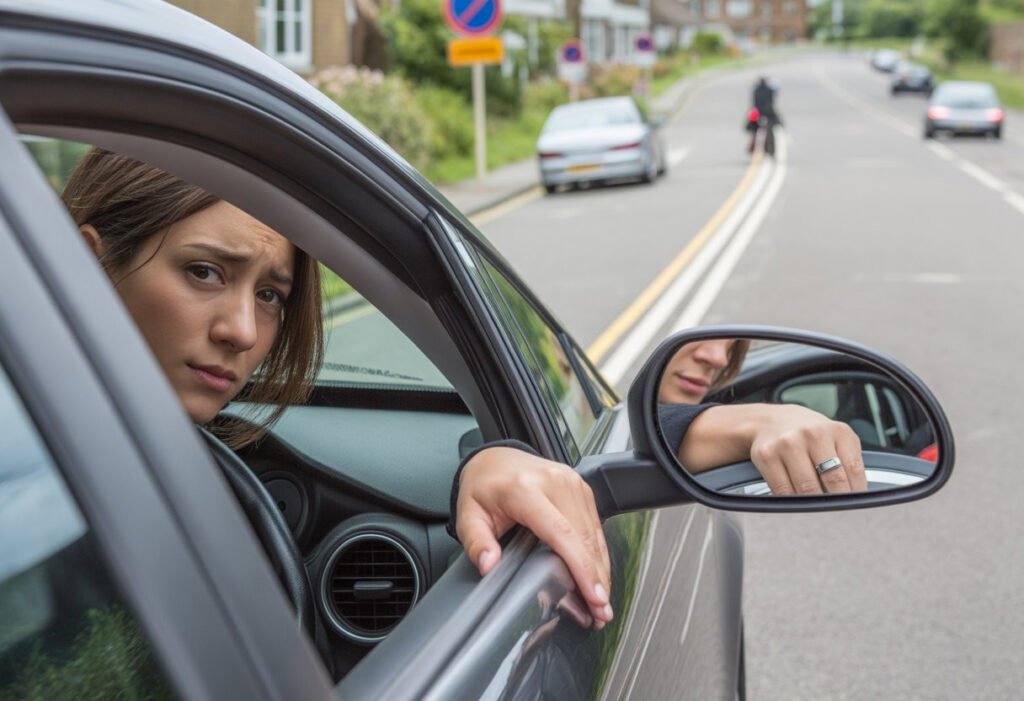
Mirror and blind spot failures account for many test failures across Great Britain. You need to develop proper checking habits before changing direction, moving off, navigating roundabouts, and using dual carriageways.
Neglecting Mirror Checks Before Changing Direction
You must check your mirrors before signalling, changing direction, or changing speed. The mirror-signal-manoeuvre routine forms the foundation of safe driving.
When changing lanes on a dual carriageway, checking your mirrors isn’t enough if you don’t act on what you see. You might spot a vehicle approaching in the lane you want to move into but still change lanes anyway. This forces the other vehicle to slow down and results in a test failure.
On multi-lane roundabouts, the problem becomes more serious. When you move from the right-hand lane to exit the roundabout, you must check your passenger-side mirror. Failing to do this means you could cut across another vehicle’s path.
The examiner will fail you if you try to change lanes when a vehicle is directly alongside you. In some cases, the examiner may need to take control of the steering wheel to prevent a collision.
Not Checking Blind Spots When Moving Off
Moving off safely requires both mirror and blind spot checks. You need to look over your shoulder to check areas your mirrors cannot cover.
Throughout your test, you must perform blind spot checks each time you move off from the side of the road. Repeatedly missing these checks will result in failure.
The situation becomes more critical when moving off from behind a parked vehicle. You might check your mirrors and blind spot but still pull out into the path of an approaching vehicle. This causes the other vehicle to slow down significantly.
After completing the emergency stop exercise, you must make rear observations before moving off. You’ve been stationary in the middle of the lane, and traffic conditions may have changed around you.
Omitting Mirror Checks at Roundabouts
Roundabout exits demand careful mirror checks. You must verify what’s happening behind and beside you before moving across lanes.
When exiting a roundabout, you cannot simply steer left without checking your mirrors first. Other vehicles may be travelling alongside you or following closely on your left. Cutting across their path without checking creates a dangerous situation.
Key mirror checks at roundabouts:
- Check your centre and left mirrors before each exit
- Verify the passenger-side mirror when moving from right to left lanes
- Glance at mirrors when maintaining your lane position
- Look again before actually steering to exit
Failing to Use Mirrors When Exiting Dual Carriageways
Dual carriageways present specific mirror challenges. You need to monitor faster-moving traffic whilst positioning yourself correctly.
When joining a dual carriageway from a slip road, you must check your mirrors and observe the traffic already on the main carriageway. Entering without these checks or failing to give way to existing traffic will fail your test.
Lane changes require particular attention. You must check your mirrors well before you need to change lanes, not at the last moment. This gives you time to assess the speed and position of other vehicles.
The right-hand lane is for overtaking only. Once you’ve overtaken, check your mirrors before moving back to the left lane. Staying in the right-hand lane unnecessarily demonstrates poor lane discipline and mirrors usage.
Road Positioning and Turning Faults
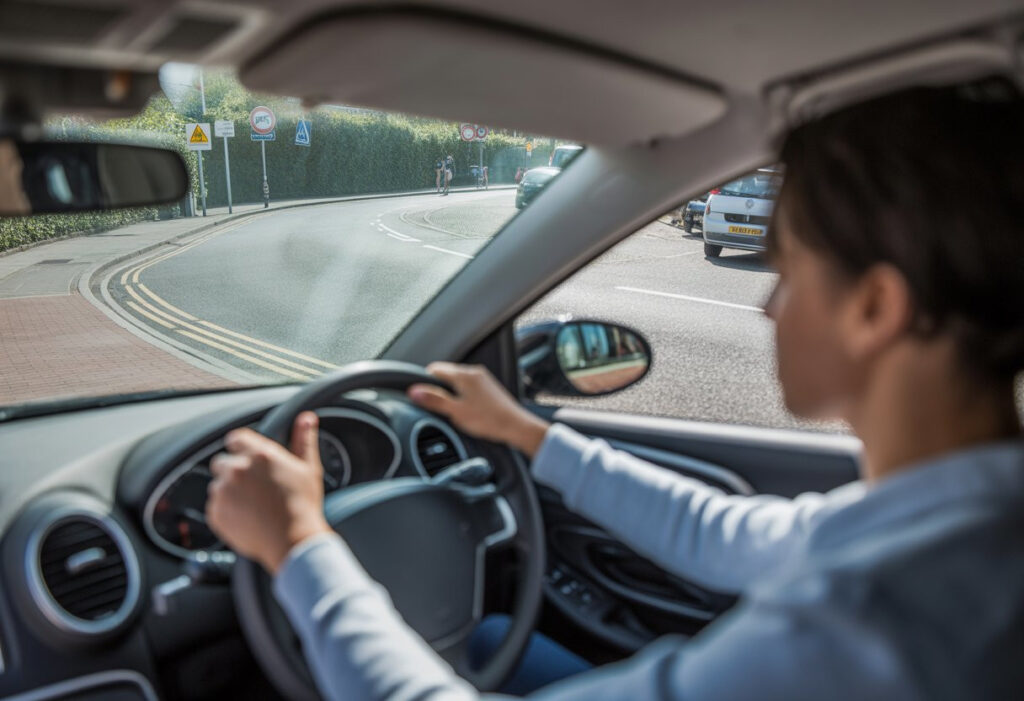
Poor positioning on the road causes many test failures, particularly when turning right or changing lanes. Incorrect positioning can obstruct other vehicles, create confusion at junctions, and put you on the wrong side of the road.
Improper Positioning When Turning Right
You must position your car as close to the centre of the road as is safe when preparing to turn right. Many learners fail because they stay too far left whilst waiting to turn right, which blocks following traffic unnecessarily. This is especially problematic on wider roads where vehicles could safely pass you on the left.
At roundabouts, positioning when turning right becomes more complex. You should use the right-hand lane to take right-hand exits. If you select the left-hand lane when it’s not appropriate and continue around the roundabout in that lane, you’ll confuse other drivers and likely fail your test.
Another common mistake happens at the end of wide roads with no markings. You need to position yourself towards the right side of your lane when turning right, even without painted lines to guide you. Staying in the left portion of a wide road whilst attempting to turn right shows poor road awareness.
When you steer late whilst turning right into a minor road, you create a “swan neck” effect. This means you end up driving fully onto the wrong side of the new road before correcting your position.
Straddling Lanes and Incorrect Lane Discipline
Straddling lanes means driving so your car sits across two lanes instead of staying within one. This happens most often at roundabouts with clear lane markings. You must keep your vehicle centred within your chosen lane.
Following road markings correctly is essential. At roundabouts with multiple lanes, the markings show you which lane to use for your intended exit. Driving across these markings or changing lanes incorrectly will result in a fault.
You should also avoid certain road markings entirely:
- Double white lines (when the line nearest you is solid) – don’t cross these unless unavoidable
- Box junctions (yellow criss-cross markings) – don’t enter unless your exit is clear
- Bus lanes – only drive in these when signs indicate you’re permitted
During normal driving, stay in the middle of marked lanes and only change lanes when necessary. On dual carriageways, don’t remain in the right-hand lane for extended periods when the left lane is clear.
Obstructing Traffic Due to Poor Positioning
Obstructing traffic occurs when your positioning prevents other vehicles from moving freely. This often happens when you’re waiting to turn right but haven’t positioned yourself far enough towards the centre line. On roads wide enough for traffic to pass, blocking the entire lane causes severe delays.
At traffic lights, poor positioning can block entire junctions. If you enter a junction when your exit isn’t clear, you’ll obstruct traffic from other directions when the lights change. Similarly, at junctions with advanced stop lines for cyclists, you must stop before the first white line, not in the cyclists’ designated area.
During normal driving, repeatedly driving too close to the kerb puts pedestrians at risk, whilst driving too close to the centre line endangers oncoming traffic. Both positioning errors demonstrate poor vehicle control and awareness of other road users.
Failure to Respond to Road Markings and Traffic Signs
Traffic signs and road markings tell you vital information about the road ahead, and missing or ignoring them can lead to dangerous situations. Examiners watch closely to see if you notice and respond properly to these signals, making this one of the main reasons learners fail their driving tests.
Misunderstanding or Ignoring Traffic Signs
You need to understand what traffic signs mean and act on them straight away. Red circular signs give you orders you must follow, like speed limits or turning restrictions. Blue circular signs tell you what you must do, such as turning left ahead or keeping to one side of the road.
Triangular signs warn you about hazards coming up. If you see a warning sign for a roundabout or junction, you should adjust your speed and position early. Missing a ‘Give Way’ sign at a junction or not stopping at a ‘Stop’ sign will almost certainly result in a serious fault.
Some learners spot the signs but don’t change how they’re driving. You might see a sign warning of a sharp bend but fail to slow down enough. This shows the examiner you’re not using the information properly. Always look well ahead and scan for signs early so you have time to respond safely.
Not Responding Correctly to Road Markings
Road markings painted on the surface give you just as much information as signs. White lines show where you can and can’t overtake, whilst broken lines at junctions tell you where to give way. Solid white lines down the centre of the road mean you must not cross to the other side unless it’s safe and you need to enter a premises or side road.
Yellow lines at the road edge tell you about parking restrictions. Box junctions have yellow criss-cross markings that you must not enter unless your exit is clear. If you drive into a box junction and get stuck, that’s a serious fault.
Lane markings help you position your car correctly. Arrow markings show which direction each lane goes, especially at roundabouts and complex junctions. Getting in the wrong lane because you didn’t read the road markings early enough creates problems for other drivers and shows poor planning.
Incorrect Use of Advanced Stop Lines
Advanced stop lines appear at traffic lights to give cyclists a safe space ahead of other traffic. You’ll see two white lines across the road, with the space between them marked with a bicycle symbol. You must stop at the first line when the light is red.
Creeping over the first line into the cyclists’ area is a common mistake. Even if no cyclists are present, you still need to respect the advanced stop line. Some learners roll forward whilst waiting, which pushes them into the prohibited zone.
If the traffic light turns amber as you approach and you can’t stop safely at the first line, you should stop at the second line. Never go past both lines when the light shows red or amber. This fault shows you’re not responding correctly to road markings and traffic signals together.
Overlooking Speed Limit and Temporary Speed Limit Changes
Speed limit changes happen throughout your test route, and you must spot them and adjust your speed accordingly. Repeater signs on lampposts remind you of the current limit, whilst circular signs with red borders show when the limit changes. Street lighting usually means a 30mph limit unless signs say otherwise.
Temporary speed limits appear on roadworks signs, often showing lower speeds like 20mph or 40mph. These limits exist for your safety and the safety of road workers. Missing a temporary speed limit change is just as serious as ignoring a permanent one.
Some learners drive too slowly, staying at 30mph when the limit increases to 40mph or 50mph on a clear road. Whilst this won’t fail you on its own, it shows you’re not reading the signs properly. Driving at a suitable speed for the conditions means using the full speed limit when it’s safe to do so.
Speed and Control Mistakes
Speed and control errors reflect fundamental driving skills that examiners watch closely throughout your test. Problems with judging appropriate speeds for different road conditions and maintaining proper control of the vehicle through steering and positioning account for a significant portion of test failures.
Not Driving at a Safe and Reasonable Speed
You need to drive at speeds that match the road conditions, traffic flow, and any potential hazards ahead. This doesn’t mean simply staying under the speed limit. It means adjusting your speed based on what’s happening around you.
Driving too slowly when conditions are clear causes unnecessary delays and frustration for other drivers. You might crawl along at 20mph on a clear 40mph road with no traffic. This shows poor awareness and decision-making.
Driving too fast for the conditions is equally problematic. You might maintain the speed limit in heavy rain when visibility is poor and stopping distances have doubled. Or you could approach a busy pedestrian crossing at full speed instead of slowing down early.
Common scenarios that lead to failure:
- Failing to slow down when passing parked cars where pedestrians might step out
- Maintaining high speeds in residential areas during school hours
- Not reducing speed on narrow roads where you need to pass oncoming traffic
- Approaching roundabouts or junctions too quickly
Poor Steering Control
Smooth and timely steering demonstrates your control over the vehicle. You must turn the wheel at the right moment and by the right amount to follow your intended path safely.
Steering too late causes your car to cut corners or swing wide into other lanes. When turning left, you might not steer enough to follow the kerb’s shape, leaving no room for vehicles turning right alongside you. When turning right into a minor road, late steering creates a “swan neck” effect where you enter on the wrong side of the road.
Steering too early puts you at risk of hitting the kerb or moving into another vehicle’s path. You need to judge the timing based on the junction’s shape and your speed.
Understeering on bends causes your wheels to mount the pavement. Even if you’re travelling at an appropriate speed, insufficient steering means you can’t follow the road’s curve properly.
Mounting the Pavement or Hitting Kerbs
Your wheels should stay on the road at all times unless there’s a valid reason to mount the kerb. Repeatedly mounting the pavement shows you lack proper control and spatial awareness.
This fault commonly occurs when pulling up on the left side of the road. Both passenger-side wheels mount the pavement before you correct your position back onto the road. It also happens when you approach parked vehicles too closely because you steered too late.
Each time your wheels hit or mount the kerb, you risk:
- Damaging your tyres
- Losing control of the vehicle
- Endangering pedestrians on the pavement
- Causing discomfort to passengers
Even gentle contact with the kerb during manoeuvres counts against you if it happens repeatedly throughout your test.
Inappropriate Use of Speed Approaching Hazards
You must identify hazards early and adjust your speed accordingly. A hazard is anything that might require you to change speed or direction, such as pedestrians, cyclists, parked cars, or upcoming junctions.
Your speed approaching hazards tells the examiner whether you’ve spotted them and assessed the risk properly. If you maintain speed when approaching a pedestrian crossing with people waiting, you haven’t demonstrated safe awareness.
You need to slow down for:
- Pedestrians near or on the road
- Cyclists who might wobble or move out
- Side roads where vehicles might emerge
- Blind bends where you can’t see the full road ahead
- Areas with reduced visibility
Not reducing speed in these situations suggests you either haven’t seen the hazard or don’t understand the risk it presents. Both demonstrate poor driving skills that will result in faults on your test.
Manoeuvres and Moving Off Safely
Moving off safely causes many test failures because learners rush or skip vital safety checks. Problems with the emergency stop and poor control during manoeuvres like reverse parking also lead to common faults.
Failing the Emergency Stop Procedure
The emergency stop tests your ability to stop quickly in an emergency whilst keeping control of the car. You need to stop the car promptly when the examiner gives the signal, usually by tapping the dashboard or raising their hand.
The most common mistake is not making rear observations before moving off again. After you complete the emergency stop, you’ve been stationary in the middle of the lane for some time. You must check your mirrors and look over your shoulder before pulling away. Other drivers may have started overtaking or stopped behind you.
Some learners also fail to stop quickly enough or lose control during the stop. You should brake firmly but avoid locking the wheels. Keep both hands on the steering wheel throughout the stop to maintain control.
Poor Control During Manoeuvres and Reverse Parking
Control issues during manoeuvres show up when you can’t position the car accurately or smoothly. During reverse parking, you might hit the kerb, position too far from it, or take too many attempts to complete the manoeuvre.
You need to use slow speed control throughout the manoeuvre. This means using the clutch to control your speed whilst looking all around for hazards. Many learners move too quickly and can’t make the necessary adjustments.
Your observations must be continuous during any manoeuvre. Check for pedestrians, cyclists, and other vehicles approaching from all directions. If someone gets too close, you should stop and wait rather than continuing.
Not Making Proper Rear Observations When Pulling Up on the Right
The pull up on the right exercise requires you to pull up on the right-hand side of the road, reverse for two car lengths, and then rejoin traffic. Moving off is the critical moment where most mistakes happen.
You must check your mirrors and blind spot before pulling away from the right-hand side. An oncoming vehicle or a car approaching from behind could be coming. If you move off without checking, you could force another driver to brake hard or stop completely.
The examiner expects you to time your move-off carefully. Wait until the road is clear in both directions before pulling out. Don’t rush this manoeuvre just because you feel pressure from other traffic.
Frequently Asked Questions
Many learner drivers have similar questions about avoiding test failures, from managing specific manoeuvres to developing better observation habits. These answers address the practical concerns that arise when preparing for your driving test.
What are the common errors to avoid during the driving test?
The most frequent errors involve poor observation at junctions and incorrect mirror use when changing direction. You need to check your mirrors before every signal, direction change or speed adjustment.
Not moving off safely causes many test failures. Always check your blind spot before pulling away from the kerb, especially after stopping behind parked vehicles.
Positioning errors when turning right at junctions often result in fails. You should position your car close to the centre line unless road markings or conditions make this unsafe.
Poor steering control leads to mounting kerbs or driving on the wrong side of the road. Steer smoothly and at the right time to follow the road’s natural curve.
How can one effectively prepare for the manoeuvres portion of the test?
Practice each manoeuvre until you can complete it smoothly without mounting the kerb. Your instructor should give you time to master parallel parking, bay parking, and pulling up on the right side of the road.
Focus on your observation routine during manoeuvres. Check all around the car before you start moving and continue checking throughout the manoeuvre.
Take your time during manoeuvres. Rushing leads to errors in steering and positioning. Book our number 1 recommended pre-test preparation tool to replicate test conditions before your actual exam.
What tips can help with staying calm and focused during the driving test?
Arrive at your test centre early so you don’t feel rushed. Being late increases stress before you even start driving.
Breathe normally and avoid holding your breath when concentrating. Proper breathing helps you stay relaxed and make better decisions.
Remember that minor mistakes don’t automatically mean failure. If you make a small error, focus on driving well for the rest of the test rather than dwelling on it.
Listen carefully to the examiner’s directions. Ask them to repeat an instruction if you’re not certain what they said.
In what ways can a learner driver improve their observation skills before the test?
Practice the mirror-signal-manoeuvre routine on every journey until it becomes automatic. Check your centre mirror, relevant side mirror, then signal before making any change.
Scan junctions properly by looking in all directions before you emerge. Look right, left, then right again at T-junctions, and give yourself time to judge the speed of approaching vehicles.
Check your blind spots before moving off or changing lanes. Turn your head to look over your shoulder rather than relying only on mirrors.
Develop commentary driving during practice. Say out loud what you see and what you’re checking to reinforce good observation habits. Working with experienced driving instructors in Manchester is one of the most effective ways to build these habits with expert guidance.
What are the key aspects of road positioning that candidates often get wrong?
Many learners drive too close to either the kerb or the centre line during normal driving. You should position your car roughly one metre from the kerb on single carriageway roads.
Lane discipline at roundabouts causes confusion. Choose the left lane for turning left or going straight ahead, and the right lane for turning right, unless road markings show otherwise.
Positioning when turning right requires you to move close to the centre line. Don’t stay too far left as this blocks following traffic unnecessarily.
Following road markings correctly is essential. Stay within your lane and don’t straddle lane markings on multi-lane roads.
How can a test candidate best manage their time leading up to the driving test?
Book regular lessons in the weeks before your test to keep your skills sharp. Gaps in practice can lead to losing confidence and forgetting key techniques.
Take at least one lesson on the roads around the test centre. Familiarity with local road layouts helps reduce anxiety on test day. Better still, consider booking a mock driving test to experience the full test format under realistic conditions before the real thing.
Avoid cramming extra lessons the day before your test. Being tired affects your concentration and reaction times.
Get enough sleep the night before and eat a proper meal before your test. Physical wellbeing directly affects your ability to focus and make good decisions whilst driving.
Need help with your Theory test?
Contact us Now
Tel: 03334049786