
Most learners who pass their driving test on the first try have one thing in common: they’ve practised with mock driving tests. Mock driving tests help you pass first time because they let you experience real test conditions, spot your weak areas, and build the confidence you need to perform well under pressure. The pass rate for first-time tests sits around 47%, but students who complete mock tests regularly tend to score much higher. Pairing mock tests with regular lessons from a school rated as one of the best driving schools in Manchester gives you the ideal combination of structured skill-building and exam-condition practice.

Taking a mock test isn’t just about checking if you can drive. It’s about understanding exactly what the examiner looks for, getting used to test-day nerves, and fixing any mistakes before they cost you a fail. When your instructor says you’re ready for the real test, you’ll know they mean it.
This article will show you what mock driving tests involve, why they work so well, and how to use them properly. You’ll learn what happens during a mock test, how to prepare effectively, and how to make the most of your instructor’s feedback so you’re fully ready when test day arrives.
Understanding Mock Driving Tests

Mock driving tests prepare learner drivers for the actual practical driving test by simulating real test conditions with a driving instructor acting as examiner. These practice sessions follow the same format and duration as official tests whilst providing valuable feedback on your performance.
What Is a Mock Driving Test
A mock driving test is a full practice run that copies the exact structure of your practical driving test. Your driving instructor acts as an examiner and assesses your driving over roughly 40 minutes, just like the real thing.
During the mock, you’ll drive the same types of roads and complete the same manoeuvres required in the official test. This includes independent driving, where you follow directions from a sat nav or road signs. Your instructor observes your performance and marks faults using the same criteria the DVSA examiner will use.
The session gives you a realistic preview of test day. You’ll experience the pressure of being evaluated whilst driving, which helps you understand what to expect. Your instructor provides detailed feedback afterwards, highlighting specific areas where you need improvement before booking your actual test.
Key Differences Between Mock and Official Tests
Mock driving tests happen with your own instructor in a familiar car, whilst official tests use a DVSA examiner you’ve never met. This makes the mock feel less intimidating, though good instructors still maintain professional distance during the assessment.
Your instructor can pause the mock to provide immediate feedback or explain a mistake. In the real test, the examiner stays silent except for directions and won’t tell you if you’ve made an error. The mock also allows you to ask questions afterwards and work on problem areas straight away.
There’s no pass or fail consequence with a mock test. This removes the pressure of losing your test fee or waiting weeks to rebook. You can take multiple mocks to track your progress, which isn’t possible with official tests due to cost and availability.
Role of the Driving Instructor
Your driving instructor designs the mock test route to match the difficulty and variety you’ll face on test day. They include residential areas, busy junctions, and higher-speed roads that feature in actual tests.
During the assessment, the instructor switches from teacher to evaluator. They note minor and serious faults using official marking guidelines, giving you an accurate picture of your readiness. Some instructors bring clipboards or forms to make the experience more authentic.
After the mock, your instructor reviews each error and creates a focused plan to address weaknesses. They might spend extra lessons on specific manoeuvres or road situations where you struggled. This targeted approach helps learner drivers fix problems efficiently before facing the real examiner.
Why Mock Driving Tests Increase Your Chances of Passing First Time
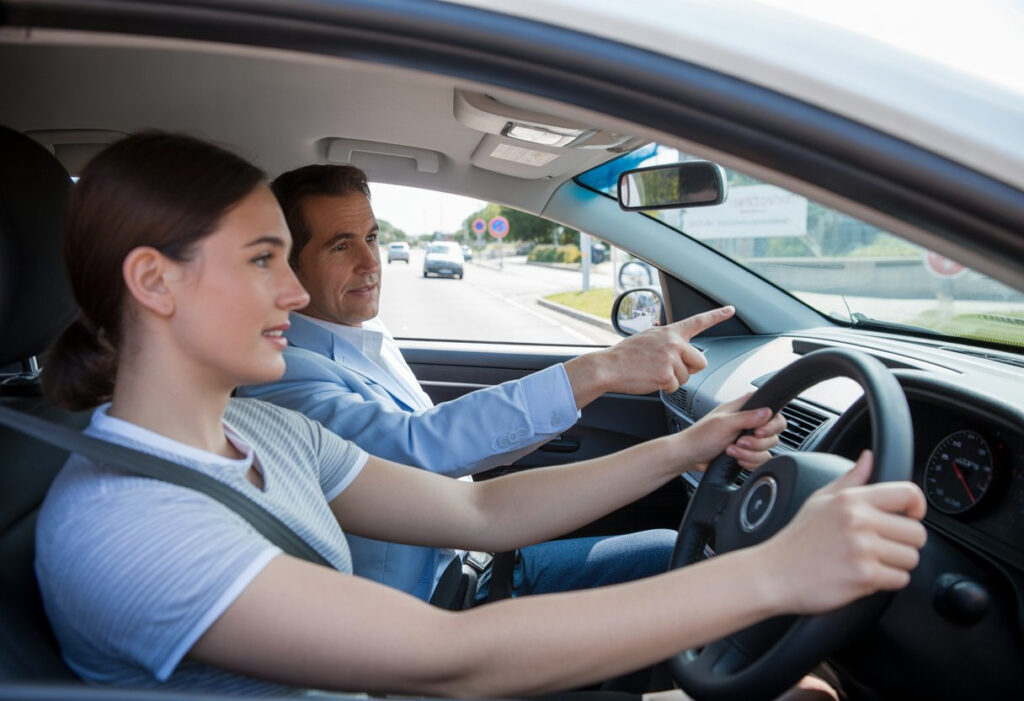
Mock driving tests prepare you for the actual exam by familiarising you with the test structure, revealing areas that need improvement, and helping you manage test day nerves more effectively. Research shows that learners who complete at least one mock test are 30-40% more likely to pass their driving test first time.
Familiarity with the Test Format
A mock driving test follows the same structure as the real exam. You’ll practise the independent driving section, perform manoeuvres when requested, and experience the timing of a full test. This helps you understand what to expect on test day.
During your driving lessons, you might focus on individual skills. A mock test combines everything into one continuous assessment, just like the real thing. You’ll learn how the examiner communicates, when manoeuvres typically happen, and how long each section lasts.
Getting used to the flow of the test means fewer surprises on the actual day. You’ll know how to interact with the examiner calmly and what happens at each stage. This familiarity removes uncertainty and helps you focus on your driving rather than worrying about what comes next. For a full walkthrough of the test day structure, read our guide on what to expect on the day of your driving test.
Spotting and Addressing Weaknesses
Mock tests reveal specific areas where you might pick up a minor fault, serious fault, or dangerous fault. Your instructor can identify problems with junction approaches, speed control, or observation that need attention before the real test.
You might think you’re ready, but a mock test often shows gaps in your knowledge or decision-making. These practice sessions highlight hesitation at roundabouts, incorrect lane positioning, or issues with checking mirrors. Once you know your weak spots, you can focus your remaining driving lessons on fixing them.
Real traffic conditions during a mock test show how you make decisions under pressure. You’ll discover if you need more practice with specific manoeuvres or if your observations need improvement. This targeted feedback is essential for how to pass your driving test first time.
Building Confidence and Managing Nerves
Driving test nerves affect most learners, but mock tests provide a safe space to practise managing anxiety. When you’ve already experienced a test-like situation, the real exam feels less intimidating.
Each mock test you complete builds your confidence. You’ll prove to yourself that you can handle the pressure and make correct decisions throughout a full test. This self-assurance leads to better performance on test day.
Test day nerves cause many failures, but repeated exposure to exam conditions reduces this anxiety. You’ll develop coping strategies and learn to stay calm even when you make a small mistake. The current UK driving test pass rate sits around 47%, but learners who take mock tests significantly improve their chances of joining the passing half.
What to Expect During Your Mock Driving Test

A mock driving test follows the same structure as your actual exam, lasting around 40 minutes and covering all the manoeuvres and skills an examiner will assess. Your instructor will use the official DL25 marking form to record faults just like at a real test centre.
Typical Structure and Components
Your mock test begins with an eyesight check where you’ll read a number plate from 20 metres away. The instructor then asks two vehicle safety questions, known as “show me, tell me” questions, at the start or during the drive.
The main driving portion lasts about 38-40 minutes. You’ll drive on various test routes that include different road types like residential streets, dual carriageways, and potentially challenging junctions. These routes mirror what you’d encounter at your local test centre.
Your mock includes an independent driving section lasting roughly 20 minutes. During this part, you’ll either follow traffic signs, a sat nav, or a combination of both. This tests your ability to drive without constant instruction whilst maintaining good control and awareness.
Key Manoeuvres Assessed
You’ll complete one of four possible manoeuvres during your mock test:
- Parallel park at the side of the road
- Bay parking (either reverse or forward into a space)
- Pull up on the right side of the road, reverse back two car lengths, and rejoin traffic
- Emergency stop (not always included, but you should be prepared)
Your instructor assesses steering control throughout all manoeuvres. They watch how you position the vehicle, check your mirrors, and manage the car’s speed. They also evaluate your mirror checks before signalling, changing direction, or altering speed. For a detailed breakdown of what each exercise involves and how to perform them correctly, see our guide to driving test manoeuvres explained.
Test Marking and Faults
Your instructor records faults using the same system as real examiners. A minor fault is a small mistake that doesn’t put anyone at risk. You can accumulate up to 15 minor faults and still pass.
A serious fault means you’ve made an error that could potentially cause danger. Dangerous faults are mistakes that create actual danger to you, the examiner, other road users, or property. Just one serious or dangerous fault results in a fail.
Your instructor marks everything on the DL25 form, giving you detailed feedback about which skills need improvement before your actual test.
Effective Preparation Strategies
Success in your driving test depends on practising the right skills in the right way. You need to master driving in various weather conditions, learn common test routes, and know the Highway Code inside out.
Driving in Different Conditions
You should practise driving in rain, fog, and darkness before your test day. Different weather changes how your car handles and how much you can see on the road. Wet roads need more braking distance, and fog requires you to use dipped headlights and drive more slowly.
Try to schedule lessons at different times of day. Morning rush hour teaches you to handle busy traffic, whilst evening sessions help you get comfortable with reduced visibility. Your instructor can take you out in light rain so you learn how to adjust your speed and following distance.
Poor weather might affect your test day, so you need to feel confident no matter what conditions you face. Practise using your windscreen wipers, demisters, and lights in different situations. The examiner expects you to adapt your driving to match the conditions safely.
Familiarising Yourself with Test Routes
UK driving test centres use roads within a specific area around their location. You should drive around your test centre multiple times before your actual test. This helps you spot tricky junctions, roundabouts, and road markings that often appear during tests.
Ask your instructor which roads examiners commonly use. Practise the challenging spots like busy roundabouts or confusing lane layouts. When you know what to expect, you feel less nervous and make fewer mistakes.
Don’t just memorise the routes. Focus on understanding why certain roads are tricky and how to handle them properly. This approach helps you apply your skills to any road, not just the ones you’ve practised.
Mastering the Highway Code
The Highway Code contains all the rules you need to know for safe driving. You must understand road signs, speed limits, and right-of-way rules before taking your UK driving test. Read through the entire book at least twice and pay special attention to sections about road markings and traffic signs.
Use the Highway Code to answer questions during mock tests. When you make a mistake whilst driving, look up the relevant rule to understand what you should have done. This method helps you remember the rules better than just reading them once.
Focus on rules about pedestrian crossings, box junctions, and motorway driving. These topics often confuse learners and can lead to test failures if you don’t know them properly.
Optimising Feedback from Mock Driving Tests
The feedback you receive after a mock driving test is only valuable if you know how to use it properly. Taking the time to review your performance thoroughly, identifying specific areas that need work, and adjusting your future driving lessons will significantly improve your chances of passing first time.
Reviewing Your Performance
Your driving instructor will provide detailed feedback immediately after your mock test. Write down every fault they mention, from minor errors to serious mistakes that would result in an automatic fail.
Ask questions about anything you don’t understand. If your instructor says you didn’t check your mirrors properly at a roundabout, find out exactly when and where you should have looked. Request specific examples of what you did wrong and what you should have done instead.
Many instructors use a marking sheet similar to the actual DVSA test form. This sheet shows exactly where you made errors during different parts of the test. Review this document carefully and note how many faults you accumulated in each category.
Record any patterns in your mistakes. If you received multiple marks for observation errors, this indicates a consistent problem that needs focused attention. Understanding these patterns helps you prioritise what to work on first.
Focusing on Improvement Areas
Identify your most serious faults first. Any error that would cause an automatic fail on the real test needs immediate attention before you book your actual driving test.
Break down complex problems into smaller, manageable tasks. If you struggle with roundabouts, separate this into specific skills: approach speed, lane positioning, observation points, and signalling. Work on each element individually during your next few driving lessons.
Create a priority list based on:
- Serious faults (immediate failures)
- Repeated minor faults (could accumulate to a fail)
- One-off mistakes (may not need extensive practice)
Practise your weak areas in different locations and conditions. If you made errors during a parallel park, don’t just practise on the same quiet street. Try different road widths, various car positions, and different times of day.
Tailoring Subsequent Lessons
Share your mock test results with your driving instructor before your next lesson. This allows them to plan specific exercises that target your problem areas.
Request dedicated time on manoeuvres or road situations where you made faults. If you struggled with meeting traffic on narrow roads, ask your instructor to take you to locations where you’ll encounter this scenario multiple times.
Schedule your lessons to include regular practice of your weakest skills. Don’t avoid difficult areas because they make you uncomfortable. Learner drivers who face their challenges directly improve faster than those who stick to familiar routes.
Book another mock test once you’ve addressed your main issues. This second assessment shows whether your targeted practice has worked and reveals any new problems that might have developed. If you want to accelerate your progress before your real test, an intensive driving course in Manchester can help you build on your mock test feedback quickly and efficiently.
Final Steps Before Your Practical Test
The days leading up to your practical test require careful preparation. Getting your paperwork in order, managing anxiety, and knowing what to expect on the day can make the difference between passing and failing.
Managing Pre-Test Nerves
Test day nerves affect nearly everyone who takes their practical driving test. It’s normal to feel anxious, but excessive nerves can interfere with your driving skills.
Practice breathing exercises in the days before your test. Take slow, deep breaths for a count of four, hold for four, then exhale for four. This technique helps calm your nervous system.
Get a good night’s sleep before your test day. Tired drivers make more mistakes and struggle to concentrate. Aim for at least seven to eight hours of sleep.
Eat a proper meal before your test. Low blood sugar can make you feel shaky and anxious. Choose something light that won’t upset your stomach.
Arrive at the test centre early but not too early. Getting there about 10 minutes before your scheduled time gives you a moment to settle without leaving you waiting around building up stress.
Ensuring Required Documentation
You must bring specific documents to your practical driving test. Without them, you cannot take the test and will lose your fee.
Your provisional driving licence is essential. You need the physical photocard, not just the paper counterpart. Check the expiry date is still valid.
Bring your theory test pass certificate. You need to have passed your theory test before taking the practical test. The certificate shows you’ve completed this requirement.
Make sure these documents are readily accessible. Don’t leave them buried in a bag where you’ll fumble to find them.
Maximising Your Chances on Test Day
Your mock driving tests have prepared you for this moment. Use what you’ve learned during those practice sessions.
Listen carefully to the examiner’s instructions. If you don’t understand something, ask them to repeat it. Misunderstanding an instruction can lead to an automatic fail.
Drive as you did in your mock tests. Don’t change your driving style or try new techniques on test day.
Check your mirrors regularly and make your head movements obvious. Examiners need to see you’re checking, not just glancing with your eyes.
Keep to speed limits and drive at an appropriate speed for the conditions. Driving too slowly can be just as problematic as driving too fast.
Frequently Asked Questions
Mock driving tests help learners understand what to expect on test day, identify weak spots in their driving, and build the confidence needed to perform well under pressure. These practice sessions recreate real exam conditions and provide valuable feedback that can make the difference between passing and failing.
What benefits do mock driving tests offer towards successful first-time passes?
Mock tests prepare you for the actual exam format and timing. You get familiar with how examiners give instructions and what they expect during each part of the test.
Taking at least one comprehensive mock test can increase your pass rate by up to 40%. This happens because you learn to handle the pressure of being evaluated and understand the test structure before the real thing.
Mock tests also reveal mistakes you might make during the actual exam. When you identify these errors in practice, you have time to correct them before test day.
How closely do mock tests mirror the actual driving test conditions?
A proper mock test recreates the real exam experience as accurately as possible. Your instructor acts as an examiner, uses the same marking criteria, and follows the official test structure.
The mock test includes all the same elements you’ll face on test day. You’ll practice manoeuvres, navigate typical test routes, and respond to examiner instructions exactly as you would in the real exam.
The timing matches the actual test, which usually lasts around 40 minutes. This helps you get comfortable with the pace and know what to expect when you take your official test.
Can mock driving tests highlight the areas where a learner driver may need further practice?
Mock tests show exactly where your driving skills need improvement. Your instructor will identify specific weaknesses, whether it’s observation at junctions, mirror checks, or speed control.
You can make mistakes during a mock test without consequences. This safe environment lets you learn from errors that would cause you to fail the real exam.
After the mock test, you’ll receive detailed feedback on every aspect of your driving. This tells you which skills to focus on during your remaining lessons before the official test.
What is the recommended number of mock tests before booking the official driving test?
Most successful candidates complete at least one full mock test before their actual exam. This single practice session helps you understand the test format and identify areas needing work.
Some learners benefit from taking multiple mock tests, especially if they struggle with nerves or need extra practice. Your instructor can advise you on how many mock tests suit your specific situation.
The best approach is to practise consistently with a professional instructor who treats every lesson as preparation for the test. When your instructor confirms you’re ready, you’ll have a strong chance of passing first time.
In what ways can feedback from mock driving tests improve driving skills?
Mock test feedback pinpoints exact moments where you make errors. Your instructor can explain what went wrong and show you the correct technique to use instead.
This targeted feedback is more valuable than general advice because it addresses your specific habits. You’ll know precisely which skills need attention rather than guessing at your weak points.
Feedback helps you understand the examiner’s perspective and what they look for during the test. You’ll learn which errors count as minor faults and which would result in immediate failure.
Do mock driving tests contribute to reducing test day nerves, and if so, how?
Mock tests reduce anxiety by removing the unknown element of the driving exam. When you’ve already experienced test conditions in practice, the real exam feels less intimidating.
Familiarity with the test format, examiner instructions, and typical routes helps you stay calm. You’ll know what’s coming next during each stage of the test instead of feeling surprised or overwhelmed.
Successfully completing a mock test builds your confidence in your abilities. This reassurance helps you manage nerves on test day because you know you can handle the exam requirements.
{ “@context”: “https://schema.org”, “@type”: “FAQPage”, “mainEntity”: [ { “@type”: “Question”, “name”: “What benefits do mock driving tests offer towards successful first-time passes?”, “acceptedAnswer”: { “@type”: “Answer”, “text”: “Mock driving tests prepare learners for the real exam format, timing, and examiner expectations. They help drivers become comfortable with test pressure and can increase first-time pass rates by up to 40% by identifying mistakes early and allowing time to correct them before the official test.” } }, { “@type”: “Question”, “name”: “How closely do mock tests mirror the actual driving test conditions?”, “acceptedAnswer”: { “@type”: “Answer”, “text”: “A proper mock driving test closely replicates real test conditions. Instructors act as examiners, use official marking criteria, follow real test routes, include all required manoeuvres, and run for the same duration of around 40 minutes.” } }, { “@type”: “Question”, “name”: “Can mock driving tests highlight the areas where a learner driver may need further practice?”, “acceptedAnswer”: { “@type”: “Answer”, “text”: “Yes. Mock tests clearly identify specific weaknesses such as poor observation, incorrect mirror use, or speed control issues. Learners receive detailed feedback after the test, allowing them to focus on the exact skills that need improvement before test day.” } }, { “@type”: “Question”, “name”: “What is the recommended number of mock tests before booking the official driving test?”, “acceptedAnswer”: { “@type”: “Answer”, “text”: “Most learners benefit from completing at least one full mock driving test before their official exam. Some may require additional mock tests depending on confidence levels and individual progress, with instructors advising on readiness.” } }, { “@type”: “Question”, “name”: “In what ways can feedback from mock driving tests improve driving skills?”, “acceptedAnswer”: { “@type”: “Answer”, “text”: “Feedback from mock tests pinpoints exact errors and explains how to correct them. This targeted guidance helps learners understand examiner expectations, distinguish between minor and serious faults, and improve specific driving habits efficiently.” } }, { “@type”: “Question”, “name”: “Do mock driving tests contribute to reducing test day nerves, and if so, how?”, “acceptedAnswer”: { “@type”: “Answer”, “text”: “Yes. Mock tests reduce anxiety by familiarising learners with the test process, routes, and examiner instructions. This familiarity builds confidence and helps drivers remain calm and focused during the actual driving test.” } } ] }Need to book a Mock Driving Test?
Contact us Now
Tel: 03334049786