
Learning to drive means mastering several key manoeuvres that examiners will test during your practical driving test. Your UK driving test will include one manoeuvre from a set list, and you need to show control, observation, and safe decision-making to pass. Many learners find these tasks stressful, but with proper preparation and practice, you can approach them with confidence.
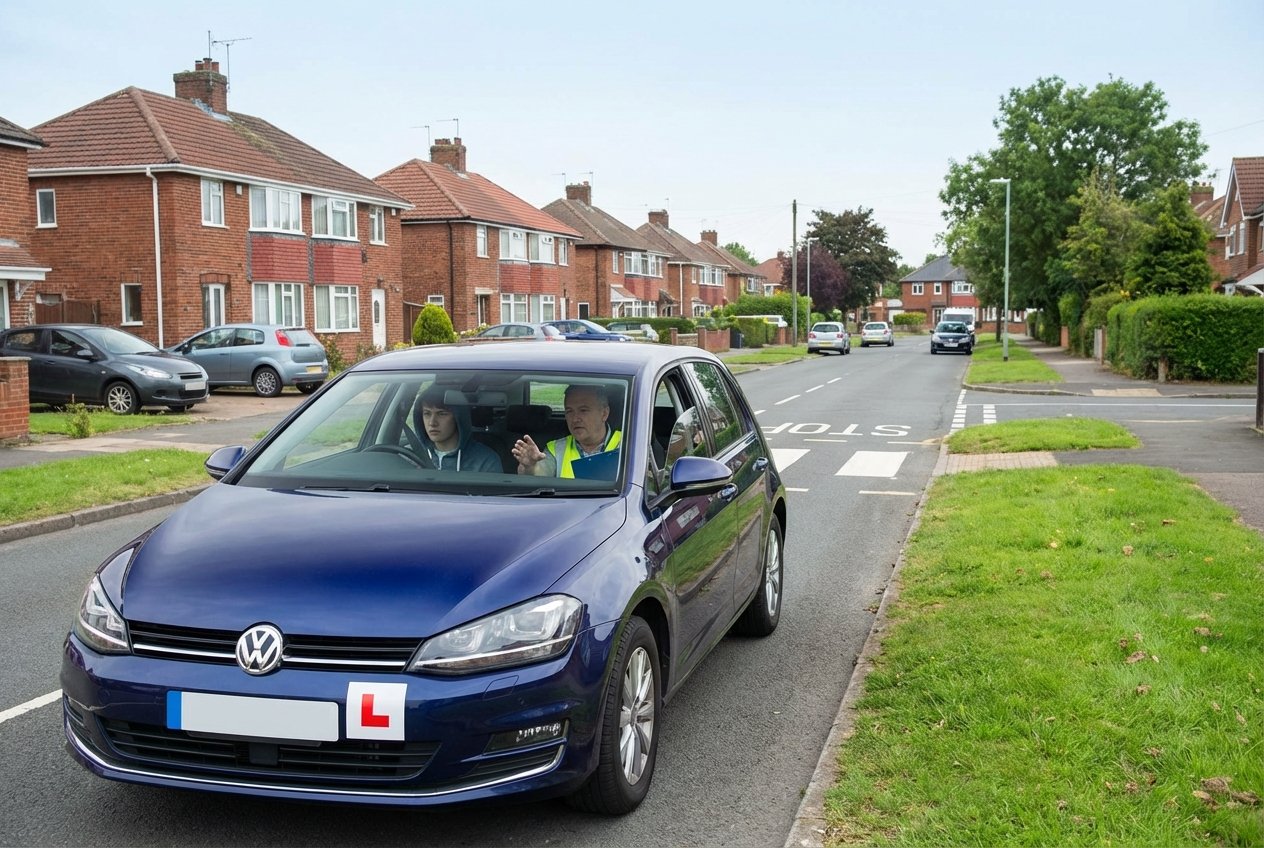
This guide breaks down each manoeuvre you might face on your driving test. You’ll learn the exact steps for parallel parking, bay parking, pulling up on the right, and performing an emergency stop. Understanding what examiners look for helps you prepare properly and avoid common mistakes that lead to test failures. If you’d also like a full overview of the test day itself, see our guide on what to expect on your practical driving test.
Whether you’re just starting your lessons or preparing for your test date, knowing these manoeuvres inside and out makes a real difference. The skills you develop through practising these tasks will also help you become a safer, more capable driver long after you pass.
Essential Role of Manoeuvres in the UK Driving Test
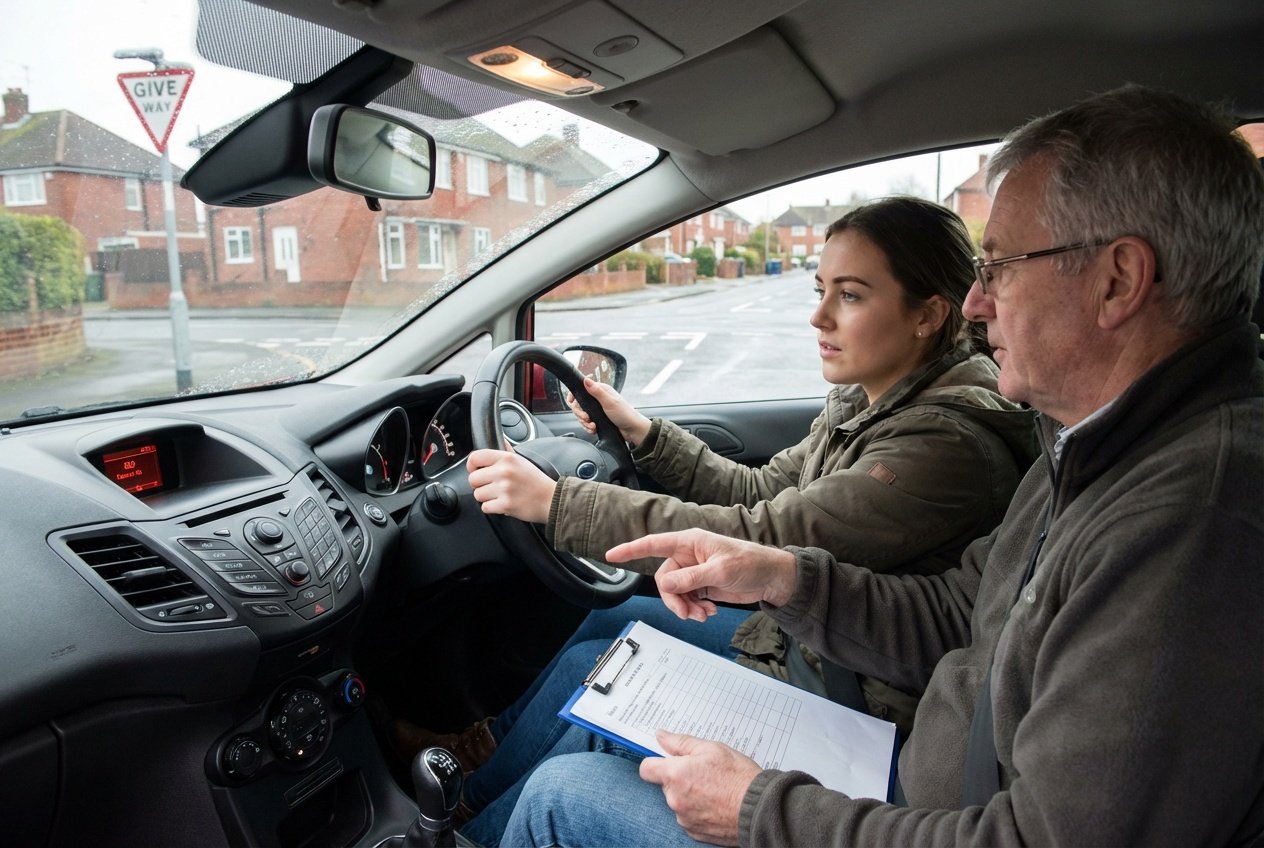
Manoeuvres test your practical ability to handle real-world driving situations that you’ll face daily once you pass. The driving examiner uses these tasks to measure your vehicle control, observation skills, and decision-making under controlled conditions.
Why Manoeuvres Matter for Learners
Driving test manoeuvres prepare you for situations you cannot avoid as a licensed driver. You’ll need to park in supermarket car parks, squeeze into tight residential spaces, and navigate narrow streets where pulling over on the right is sometimes necessary.
These tasks develop your spatial awareness and help you understand your car’s dimensions. When you practise bay parking or parallel parking, you learn how much room you need and how to judge distances accurately. This skill prevents you from hitting other vehicles or mounting kerbs in everyday situations.
The manoeuvres also build your confidence in reversing. Many new drivers feel anxious about going backwards, but regular practice makes this a routine part of driving. You’ll only be asked to perform one manoeuvre during your test, but you must be ready for any of them. If you want to master every manoeuvre in a short time frame, our top-rated intensive course covers all of them in structured daily sessions.
Assessment Criteria and Examiner Expectations
Your driving examiner watches for specific elements during each manoeuvre. They check whether you complete the task accurately, maintain control throughout, and observe your surroundings properly.
Key assessment points include:
- Position within parking bays or alongside the kerb
- Number of attempts needed to complete the manoeuvre
- Control of steering, clutch, and speed
- Awareness of other road users and pedestrians
- Response to potential hazards
Minor errors like slight adjustments to straighten your car usually won’t fail you. However, serious mistakes such as poor observations, mounting the kerb forcefully, or losing control will result in a fail. The examiner expects you to demonstrate safe, competent driving that shows you’re ready for independent road use.
Safety, Observation, and Vehicle Control
Observations form the foundation of safe manoeuvring. You must check mirrors and blind spots before, during, and after each manoeuvre. Other vehicles, cyclists, and pedestrians can appear quickly, and you need to spot them early.
Vehicle control means managing your speed, steering, and clutch smoothly. Jerky movements or stalling show poor control and make manoeuvres harder to complete accurately. You should move slowly enough to make precise adjustments but confidently enough to show you’re in command of your car.
The Highway Code emphasises courtesy to other road users during manoeuvres. If someone needs to pass whilst you’re reversing into a bay, you must stop and wait. This shows the examiner you understand how to balance completing your task with maintaining road safety.
Parallel Parking: Step-by-Step Instructions
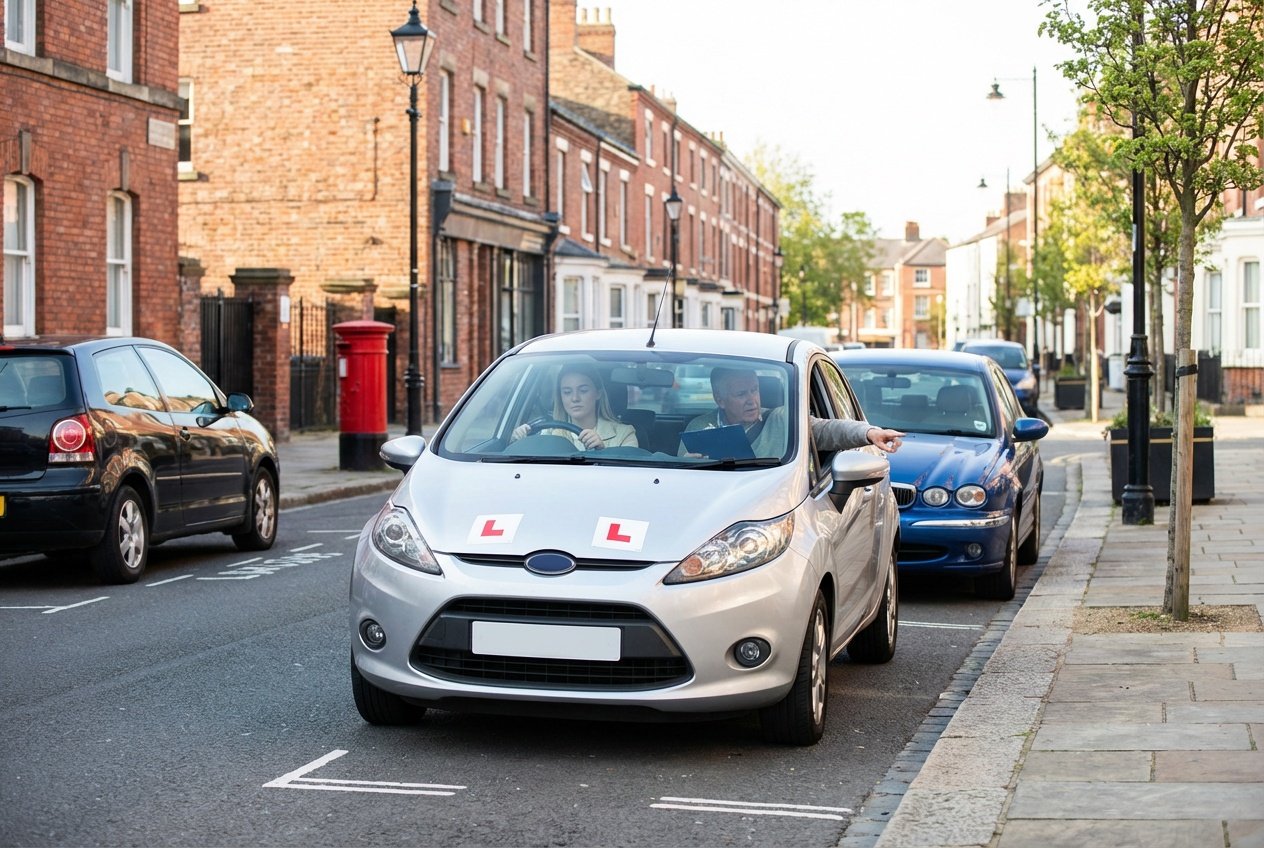
Parallel parking requires precise steering, careful observations, and clear reference points to position your car safely between two vehicles. The manoeuvre follows a structured sequence using reverse gear whilst maintaining awareness of your surroundings through constant mirror checks.
Preparing for Parallel Parking
Before you begin, identify a suitable space that’s roughly 1.5 times your car’s length. Pull up alongside the vehicle in front of the space, keeping about 1 metre distance between your car and theirs. Your door mirrors should roughly align with each other.
Check all your mirrors and complete a full blind spot check before signalling left if other road users are nearby. The driving examiner will be watching your observations closely at this stage.
Position your car so you’re parallel to the parked vehicle. This positioning serves as your first key reference point. Keep your speed low by using clutch control and prepare to select reverse gear.
Take a final 360-degree observation around your car. Look for pedestrians, cyclists, or approaching vehicles. If anyone is nearby, wait for them to pass before starting the manoeuvre.
Executing the Manoeuvre Safely
Select reverse gear and begin moving slowly backwards. When your rear wheels align with the back of the parked car beside you, stop and turn your steering wheel one full turn to the left. This is the 1-2-1 method’s first turn.
Continue reversing whilst checking your left mirror and rear window constantly. Your car will angle into the space. When your car reaches roughly 45 degrees, or when the kerb appears in your nearside mirror, stop again.
Turn your steering wheel two full turns to the right whilst stationary. Resume reversing slowly. Your car’s front end will now swing towards the kerb. Watch your nearside mirror carefully to judge your distance from the kerb—you want to finish within 30cm but not touch it.
Once your car is parallel with the kerb, straighten your steering wheel by turning it one full turn to the left. Complete a final mirror check to ensure you’re not too close to either vehicle. Apply your handbrake and select neutral to secure your vehicle.
Common Mistakes and How to Avoid Them
Many learners turn the steering wheel too early or too late, causing the car to end up at an awkward angle. Use your reference points consistently and ask your instructor to help you identify visual markers specific to your car.
Finishing too far from the kerb is another frequent error. Check your nearside mirror throughout the manoeuvre to monitor your distance. If you’re too wide, pull forward and attempt the reverse again with tighter steering.
Forgetting observations causes serious faults during tests. Make mirror checks and blind spot checks habitual before you start, during each phase, and before straightening up. The driving examiner marks observation lapses as dangerous. Observation failures are also among the top reasons learners fail their driving test. Worth reading before your test day.
Mounting the kerb results in an automatic serious fault. Reverse very slowly and adjust your steering gradually. If you do touch the kerb, stop immediately, move forward slightly, and correct your position safely.
Bay Parking Techniques: Forward and Reverse Methods
Bay parking requires precise control of your vehicle and good spatial awareness to manoeuvre into marked spaces. Both forward and reverse methods have specific steps and reference points that help you position your car accurately during your driving test.
Forward Bay Parking Explained
Forward bay parking involves driving straight into a parking space, which means you’ll need to reverse out when leaving. Start by positioning your car on the opposite side of the road from your target bay, giving yourself the widest possible turning circle.
Drive forward slowly until the bay’s right-hand line appears just below your right wing mirror. This is your first key reference point. Check your mirrors and blind spots, then steer to full right lock as you edge into the space.
When your dashboard aligns with the horizon line, straighten your steering wheel. Continue moving forward until the kerb or front line sits just underneath your wing mirror. Apply the handbrake once you’re fully positioned.
The driving examiner will assess your control, accuracy and observation throughout the manoeuvre. Keep your speed low and check for pedestrians constantly.
Reverse Bay Parking: How to Get it Right
Reverse bay parking is often preferred because you can drive straight out when leaving, making it safer in busy car parks. Position your car about two car lengths past your chosen bay, with roughly a car’s width of space between you and the parking spaces.
Line up the middle of your passenger door with the white line two bays along from your target space. Select reverse gear and check all around your vehicle before moving.
Steer to full left lock as you reverse slowly. Watch your left wing mirror until the bay’s left-hand line appears, then check your right mirror for the right-hand line. When both white lines are visible in your wing mirrors, straighten your steering wheel and continue reversing.
Edge backwards using your mirrors to judge the distance. Stop before hitting the kerb or rear boundary. These reference points help develop your spatial awareness and ensure accurate positioning every time.
Pulling Up on the Right and Rejoining Traffic
This manoeuvre tests your ability to park against the traffic flow, reverse in a straight line for two car lengths, and safely rejoin traffic on the correct side of the road. The driving examiner will assess your observations, vehicle control, and awareness throughout all three parts.
Pulling Up Safely Against Traffic Flow
When your driving examiner asks you to pull up on the right, you need to find a safe and legal spot. Check your mirrors and look for a clear space without driveways, junctions, or parked cars blocking your path.
Signal right in good time to warn other road users of your intentions. Make thorough observations by checking your centre mirror, right mirror, and your right blind spot before moving across.
Position your car reasonably close to the kerb, around 30 centimetres away. Apply the handbrake and select neutral once you’ve stopped. You should end up parallel to the kerb, not at an angle.
Keep your engine running unless your examiner tells you otherwise. The key is to stay alert and ready for the next part of the manoeuvre.
Two-Car-Length Reverse Manoeuvre
Once you’ve stopped on the right, the examiner will ask you to reverse for about two car lengths. Before you start, check all around your vehicle for pedestrians, cyclists, and traffic.
Select reverse gear and prepare to move. Keep checking your mirrors and looking through all windows as you reverse. You need to maintain observations throughout the entire reversing section.
Move slowly and keep the car straight and parallel to the kerb. If you start to drift away from the kerb or get too close, make small steering corrections. Two car lengths is roughly the distance of two parked cars, about 8 to 10 metres.
Stop when you’ve reversed the correct distance. Apply the handbrake and select neutral.
Merging Back Into Traffic
This final part requires careful planning because you’re on the wrong side of the road. Check your mirrors thoroughly, looking for traffic approaching from both directions.
Select first gear and prepare to move when safe. You’ll need to cross to the left side of the road, so wait for a clear gap in traffic from both directions.
Signal left to show you’re moving back to the correct side. Check your blind spot over your left shoulder before moving off.
Make steady progress across the road without causing other vehicles to slow down or change direction. Once you’re back on the left side, cancel your signal and continue driving normally. The examiner is watching to ensure you don’t pull up in a dangerous position or create hazards when rejoining traffic.
Emergency Stop: Reacting Quickly and Safely
About one in three driving tests includes an emergency stop. This manoeuvre tests your ability to stop the car quickly whilst maintaining full vehicle control and keeping yourself safe.
Understanding the Emergency Stop
The emergency stop demonstrates how you react when something unexpected happens on the road. Your examiner will ask you to drive normally, then give a signal for you to stop as quickly and safely as possible. The signal is usually a raised hand or slap on the dashboard, along with the verbal command “stop.”
You won’t get advance warning during the test. The examiner chooses a safe location where performing an emergency stop won’t endanger you or other road users.
This manoeuvre checks three key things:
- Your reaction time
- Your ability to stop safely
- Your control of the vehicle throughout
The examiner expects you to stop in a straight line without skidding or losing control.
Proper Braking Technique
Press the brake pedal firmly and progressively as soon as you hear the signal. Don’t slam the brakes immediately as this can lock the wheels on cars without ABS.
Keep both hands on the steering wheel whilst braking. Just before the car stops completely, press the clutch down to prevent stalling. This happens in the final moment of stopping, not at the start.
For cars with ABS: Apply firm, constant pressure to the brake pedal. Don’t pump the brakes. The ABS system will pulse automatically.
For cars without ABS: Apply strong pressure but stop just short of locking the wheels. If you feel the wheels lock, ease off slightly then reapply pressure.
After stopping, secure the car by applying the handbrake and putting the gear into neutral. Check your mirrors before moving off again.
Demonstrating Control Under Pressure
Safe stopping means more than just pressing the brake pedal hard. You must maintain steering control throughout the stop. Keep your eyes forward and the steering wheel straight.
The car should stop in a straight line within the same lane. Swerving or veering shows poor vehicle control. Your examiner watches how smoothly you handle the pressure of stopping quickly.
Before moving off after the emergency stop, look all around you. Check mirrors and blind spots. Signal if necessary. Other drivers might not expect you to start moving again after such a sudden stop.
Stay calm during this manoeuvre. Panic leads to mistakes like forgetting the handbrake or stalling when you move off again.
Building Key Skills for All Driving Manoeuvres
Success in driving test manoeuvres depends on three core abilities: accurate observations through mirror checks, effective use of reference points, and strong spatial awareness combined with smooth vehicle control. These skills work together in every manoeuvre you’ll face on test day.
Mastering Observations and Mirror Checks
Your mirror check routine forms the foundation of safe manoeuvres. Before you start any driving manoeuvre, check your interior mirror first, then your relevant door mirrors.
You need to look over your shoulder for blind spots before reversing or changing direction. This physical check catches hazards that mirrors miss, like cyclists or pedestrians close to your car.
Essential observation sequence:
- Interior mirror
- Door mirrors (both sides)
- Blind spot check (physical look)
- Repeat throughout the manoeuvre
During the manoeuvre itself, keep checking your mirrors every few seconds. You’re looking for other vehicles, pedestrians, and cyclists who might enter your path. Your examiner wants to see your head moving as you make these observations. Small, regular checks prove you’re aware of your surroundings rather than focusing only on the manoeuvre.
Using Reference Points Effectively
Reference points help you judge your car’s position without guessing. These are specific parts of your car that line up with road markings or kerbs.
Different cars have different reference points, so practise in the vehicle you’ll use for your test. Your instructor will show you which parts of your bonnet, door mirrors, or windows work best for that specific car.
Common reference points include where the kerb appears in your door mirror during parallel parking or when a line meets a certain point on your window during bay parking. Write down the reference points that work for you and practise until they become automatic.
Remember that reference points are guides, not rules. Weather conditions, different road markings, and varying car sizes mean you’ll need to adjust slightly based on what you see.
Developing Spatial Awareness and Control
Spatial awareness means knowing where your car is in relation to other objects. You build this skill through practice and by understanding your car’s dimensions.
Vehicle control during manoeuvres requires smooth, coordinated movements. Use the clutch to control your speed whilst reversing, keeping it slow enough to make adjustments but steady enough to maintain control. Your steering should be deliberate but not rushed.
Key control techniques:
- Keep your speed walking pace or slower
- Use clutch control for smooth reversing
- Turn the wheel steadily, not in quick jerks
- Straighten up gradually as you near your target position
Judge distances by looking at the gaps around your car. In bay parking, equal space on both sides means you’re centred. During parallel parking, you need roughly 30 centimetres from the kerb. These judgements improve each time you practise, building the confidence you need for test day. The best way to develop these skills is with a qualified instructor. Explore our driving lessons in Manchester to get started.
Frequently Asked Questions
These questions cover the practical details learners need to know about specific manoeuvres, common errors to watch for, and what examiners look for during your UK driving test.
What specific manoeuvres can I expect to perform during my UK driving test?
You will be asked to complete one of three reversing manoeuvres during your test. These include parallel parking at the side of the road, reverse bay parking in a car park, or pulling up on the right-hand side of the road and reversing for two car lengths.
Your examiner will also ask you to pull forward into a bay parking space if you complete reverse bay parking. The emergency stop may be included in your test, though not every candidate will be asked to demonstrate it.
All manoeuvres test your control, accuracy, and observation skills. You need to check your mirrors and blind spots regularly whilst performing each manoeuvre.
Could you outline the key steps for executing the parallel parking manoeuvre?
Pull up alongside the vehicle in front of the space you want to reverse into, keeping about half a metre distance. Line up your door mirror with the rear of the parked car.
Start reversing slowly and turn the steering wheel fully to the left when your car reaches the 45-degree angle. Check all around for pedestrians, cyclists, and other vehicles.
Straighten your wheels when your car is parallel to the kerb. Continue reversing until your car sits fully within the space, then secure the vehicle by applying the handbrake.
You should finish reasonably close to the kerb without mounting it. Your examiner allows you to make corrections if needed.
What are the most common mistakes to avoid when performing the reverse bay parking?
Failing to make proper observations is the most frequent error. You must check your mirrors and look over your shoulder before you start reversing and throughout the entire manoeuvre.
Reversing too quickly prevents you from maintaining proper control. Keep your speed slow enough to make adjustments as needed.
Positioning your car at the wrong starting point makes the manoeuvre harder. You need to drive past the bay you want to use until your car is in the correct position to begin reversing.
Mounting the kerb or hitting another vehicle will result in a serious fault. Watch your reference points and make small steering adjustments to stay within the bay lines.
How should I prepare for the emergency stop procedure in my driving test?
Your examiner will explain the emergency stop before you begin the test. They will brief you on the signal they will use, which is raising their hand and saying “Stop”.
When you see the signal, react quickly by pushing the clutch and brake pedals down together. Keep both hands on the steering wheel to maintain control as the car stops.
The car may skid slightly, which is acceptable. You must bring the vehicle to a controlled stop without causing danger to other road users.
Only one in three tests includes an emergency stop. Your examiner will choose a safe location where the procedure will not put anyone at risk.
What essential checks are involved in the ‘show me, tell me’ portion of the driving test?
You will answer one ‘tell me’ question at the start of your test before you begin driving. This question asks you to explain how you would carry out a safety task, such as checking tyre pressure or testing the brakes.
The examiner will ask one ‘show me’ question whilst you are driving. You need to demonstrate a task like operating the windscreen wipers or turning on the rear heated screen.
These questions test your knowledge of basic vehicle safety and maintenance. You should familiarise yourself with your car’s controls and the location of key components like the oil dipstick and brake fluid reservoir.
Getting one or both questions wrong counts as one minor fault. This will not fail your test on its own.
Can you explain the forward bay parking manoeuvre and its assessment criteria?
Forward bay parking requires you to drive into a parking bay in a car park. You perform this manoeuvre after successfully completing a reverse bay park.
You must position your car accurately within the bay markings. The car should sit centrally without crossing the lines on either side.
Your examiner assesses your control, accuracy, and observations throughout. You need to check for pedestrians and other vehicles before entering the bay.
This manoeuvre is simpler than reverse bay parking because you have better visibility. You still need to demonstrate proper clutch control and steering accuracy to pass.
Need to book a Driving Lesson?
Contact us Now
Tel: 03334049786