
Manchester Congestion Charge Preparedness is one of the most important topics for anyone driving, learning to drive, or planning journeys across Greater Manchester right now. A staggering £104.5 million was spent on the Manchester Clean Air Zone before it was officially cancelled, making this one of the biggest transport policy U-turns in the city’s history, and every driver needs to understand what it means for them in 2026.

Key Takeaways
| Question | Answer |
|---|---|
| Is there a congestion charge in Manchester in 2026? | No. The Manchester Clean Air Zone charging scheme was officially cancelled. No congestion charge is currently in operation. |
| Do learner drivers need to worry about congestion charges? | Not right now, but understanding road charging schemes is part of being a fully prepared, competent driver. Our driving lessons in Manchester cover real-world road awareness. |
| What is Manchester doing instead of a congestion charge? | Manchester is investing in cleaner buses through the Bee Network franchise, upgrading vehicles, and improving air quality through fleet improvements rather than driver charges. |
| Will a congestion charge come back to Manchester? | It is possible in the future. Manchester Congestion Charge Preparedness means staying informed and knowing how to adapt your driving habits if schemes return. |
| Which areas of Manchester were most affected by the Clean Air Zone plans? | Central Manchester zones, Trafford Park, Salford, Oldham, and Stockport were all within proposed charging boundaries. Our Trafford Park driving lessons and Salford lessons prepare you for all local road conditions. |
| How can a driving school help with congestion charge preparedness? | A good instructor will teach you about road zones, charge boundaries, and route planning as part of real-world driver education, not just test pass techniques. |
| Are there ANPR cameras still active in Manchester? | Yes. Over 800 ANPR cameras installed for the Clean Air Zone remain in place, with nearly 90% of residents supporting their use for crime prevention rather than charging. |
What Is the Manchester Congestion Charge and Why Was It Scrapped?
Manchester’s Clean Air Zone (CAZ) was a proposed road charging scheme designed to reduce nitrogen dioxide (NO2) pollution across Greater Manchester. Under the original plans, older, more polluting vehicles would have been charged a daily fee to enter designated zones. Learning with one of the top-rated driving schools in Manchester city centre means you will get proper guidance on navigating these zones safely and confidently from day one.
The scheme was officially abandoned after intense public opposition and significant political pressure. The money already spent (that eye-watering £104.5 million figure) went towards ANPR infrastructure, planning, and consultation, none of which resulted in a single day of live charging.
Understanding this background is a core part of Manchester Congestion Charge Preparedness. Whether you are a new learner or an experienced driver, knowing the history of road charging in your city helps you make smarter decisions on the road.
Manchester Congestion Charge Preparedness: The Current Situation in 2026
As of 2026, there is no active congestion charge operating in Manchester. However, that does not mean drivers can afford to be complacent.
The infrastructure is still there. The 800+ ANPR cameras installed across Greater Manchester are active and operational, even if they are not currently billing drivers. Greater Manchester authorities continue to discuss long-term transport funding, and road user charging remains a live policy option at both local and national government level.
Proper Manchester Congestion Charge Preparedness means keeping up with policy developments, understanding which zones were originally proposed, and making sure your vehicle meets modern emission standards. It also means knowing your routes well enough to adapt quickly if any new scheme is announced.


Why Manchester Congestion Charge Preparedness Matters for Learner Drivers
If you are learning to drive in Manchester right now, you might be wondering why any of this is relevant to you. The answer is simple: great drivers are prepared drivers.
Passing your test is not just about three-point turns and parallel parking. It is about understanding the full picture of driving in a modern city. That means knowing about road charging zones, emission standards, and how to plan journeys efficiently.
At L Team, our Manchester driving lessons go beyond the test syllabus. We teach you to think like a confident, aware road user who is ready for whatever Manchester’s roads throw at you, now and in the future.
Did You Know?
89.7% of consultation respondents support repurposing CAZ cameras for police use, meaning the 800+ ANPR cameras installed for the congestion charge are staying in place, just not for billing drivers.
Source: TfGM
The Clean Air Zone: Key Areas Every Manchester Driver Should Know
Even though the charging scheme was cancelled, the geographical boundaries that were originally proposed tell you a lot about where Manchester’s traffic and air quality pressures are highest.
The proposed Clean Air Zone covered a large swathe of central Manchester and extended into key surrounding areas. Here is a summary of the zones that were included in the original plans:
- Central Manchester including Medlock and city centre roads
- Salford and routes crossing into the city from the west
- Trafford Park and surrounding industrial corridors
- Stockport and southern approach routes
- Oldham and eastern arterial roads
- Didsbury and Chorlton on key south Manchester corridors
If you are taking driving lessons in Cheadle Hulme or lessons in Didsbury, your instructor will make sure you are familiar with these routes and the type of driving they demand.
Manchester Congestion Charge Preparedness is, in large part, about knowing your geography. The more familiar you are with the city’s road layout, the more adaptable you will be if any future scheme launches.
How Manchester’s Air Quality Is Improving Without a Congestion Charge
One of the most important parts of understanding Manchester Congestion Charge Preparedness is recognising why the charge was ultimately deemed unnecessary, at least for now.
Manchester has made extraordinary progress on air quality through other means. Nitrogen dioxide (NO2) exceedance sites across Greater Manchester fell from 129 in 2019 to just 38 in 2025, putting the city on track to meet legal air quality limits without the need for direct driver charging. This is a remarkable achievement and it happened through investment in cleaner transport rather than financial penalties on drivers.
For drivers, this is good news. It means Manchester can deliver on its clean air commitments without creating a daily financial burden for those who rely on their vehicles.
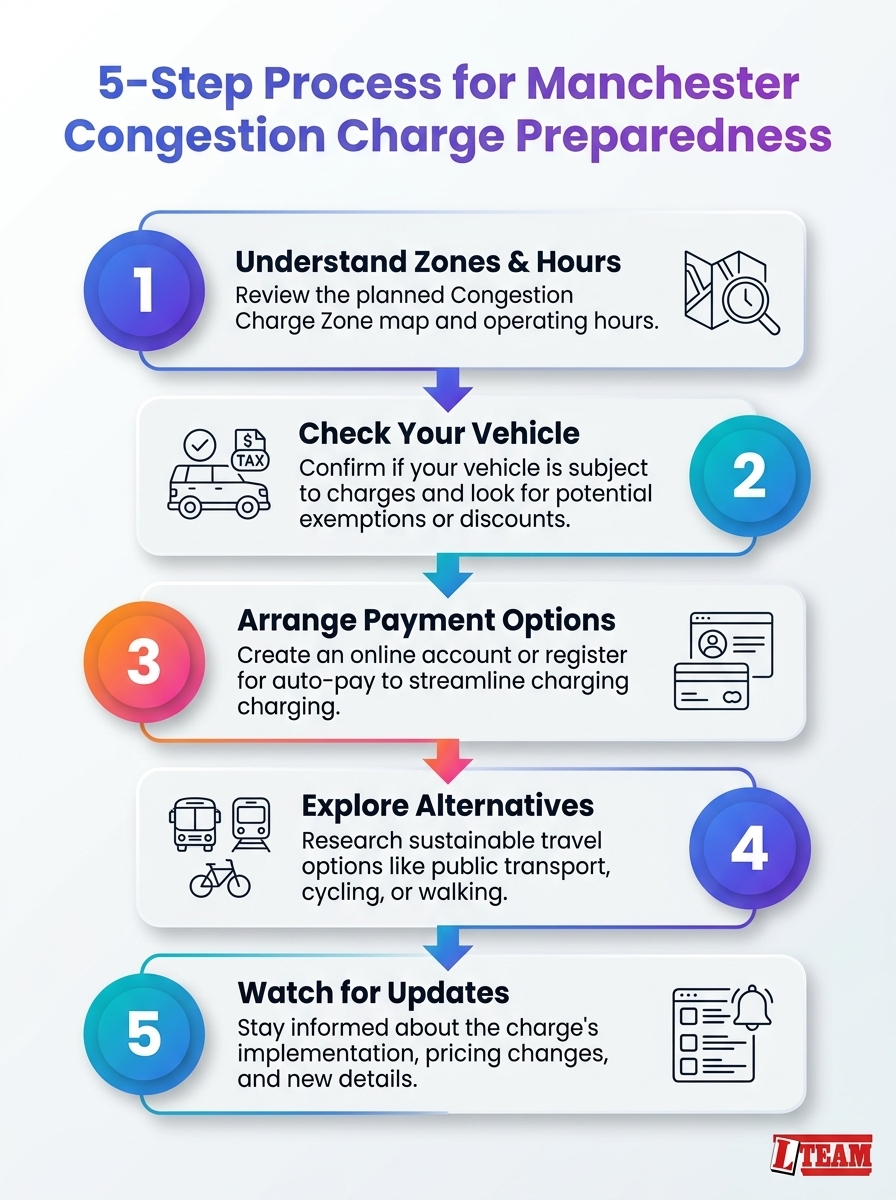
A concise five-step visual guide showing how Manchester can prepare for the congestion charge, from awareness to implementation. The infographic helps readers plan priorities and timelines.
The Bee Network: Manchester’s Big Bet on Public Transport Preparedness
A massive part of Manchester’s strategy for reducing congestion without charging drivers has been the Bee Network bus franchise. This is Greater Manchester’s publicly controlled bus network, launched in phases from 2023 onwards, and it is changing how people move around the city.
Bus patronage grew by 14% year-on-year in the first Bee Network franchising areas, proving that when public transport is reliable, affordable, and frequent, people genuinely use it. This growth directly reduces car journeys in the city, which in turn lowers the political and practical case for driver charging schemes.
For drivers, this matters for two reasons. First, there are more buses on the road, which means more encounters with bus lanes, stops, and priority signals. You need to be prepared for that. Second, fewer private cars in peak zones means cleaner, less congested driving conditions overall.
Our Chorlton driving lessons and Heaton Mersey lessons cover exactly these kinds of real-world, mixed-traffic situations. You will be comfortable navigating busy bus corridors from day one.
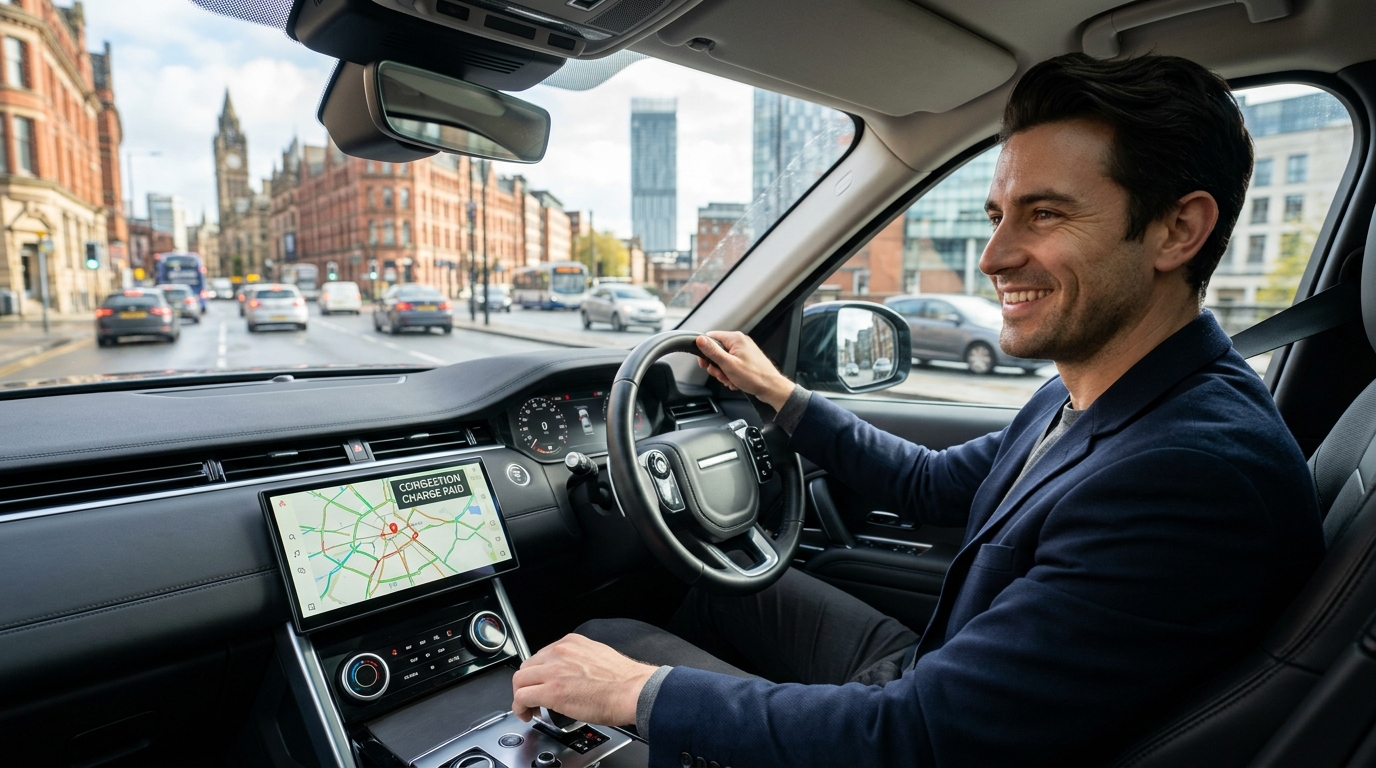
Manchester Congestion Charge Preparedness: Vehicle Emission Standards You Need to Know
Even without an active charge, understanding vehicle emission standards is a core part of Manchester Congestion Charge Preparedness. If a scheme does return in the future, your vehicle’s Euro emission rating will determine whether you pay a charge or travel for free.
Here is a quick guide to the standards that matter:
| Vehicle Type | Compliant Standard | Typical Registration Year |
|---|---|---|
| Petrol car | Euro 4 or above | 2006 onwards |
| Diesel car | Euro 6 or above | 2015 onwards |
| Electric vehicle | Always compliant | Any year |
| Hybrid vehicle | Depends on petrol/diesel engine standard | Check individual vehicle |
You can check your vehicle’s emission standard on the DVLA website using your registration plate. It takes about 30 seconds and could save you significant money if any future charge is introduced.
At L Team, we teach in a modern, top-of-the-range dual-controlled vehicle that comfortably meets current and anticipated emission standards. If you’re considering an electric or hybrid vehicle, our automatic driving lessons in Manchester are the perfect way to get comfortable behind the wheel of a cleaner, greener car from day one.
Manchester Congestion Charge Preparedness for Drivers in Outer Areas
Manchester Congestion Charge Preparedness is not just a city centre concern. Drivers travelling into Manchester from outer areas face the biggest exposure to any future charging scheme, because they are the ones crossing zone boundaries on a daily basis.
If you commute into central Manchester from areas like Stockport, Oldham, or Swinton, you need to be particularly aware of proposed zone boundaries and alternative routes that may fall outside any future charge area.
The key steps for outer-area drivers are:
- Know your current vehicle’s Euro emission rating
- Identify alternative routes that avoid proposed charge zones
- Understand park-and-ride options connected to the Bee Network
- Stay up to date with TfGM (Transport for Greater Manchester) announcements
- Consider carpooling for peak-time journeys into the city
Did You Know?
Nitrogen dioxide (NO2) exceedance sites across Greater Manchester fell from 129 in 2019 to just 38 in 2025, putting Manchester on track to meet legal air quality limits without a congestion charge in operation.
Source: CleanAirGM 2026
How to Stay Ahead of Future Road Charging in Manchester
Manchester Congestion Charge Preparedness is an ongoing mindset, not a one-time checklist. Road user charging is a live national policy debate in 2026, and any driver who wants to avoid being caught off guard needs a clear plan.
Here are our top practical tips for staying prepared:
- Sign up for TfGM updates so you hear about new consultations before they become policy
- Check your vehicle’s emission standard now, not when a charge is announced
- Learn multiple routes into key destinations so you can switch if a zone activates
- Understand ULEZ and CAZ precedents from London and other UK cities, these are the models Manchester would likely follow
- Keep your driving skills sharp, confident drivers adapt to new road conditions faster
- Consider future vehicle purchases with emission compliance in mind
The drivers who are best prepared for the Manchester Congestion Charge changes are the ones who treat road awareness as a permanent habit. Our driving in Manchester – guide to traffic laws is a great place to deepen that knowledge. That is exactly what we build into every lesson here at L Team.
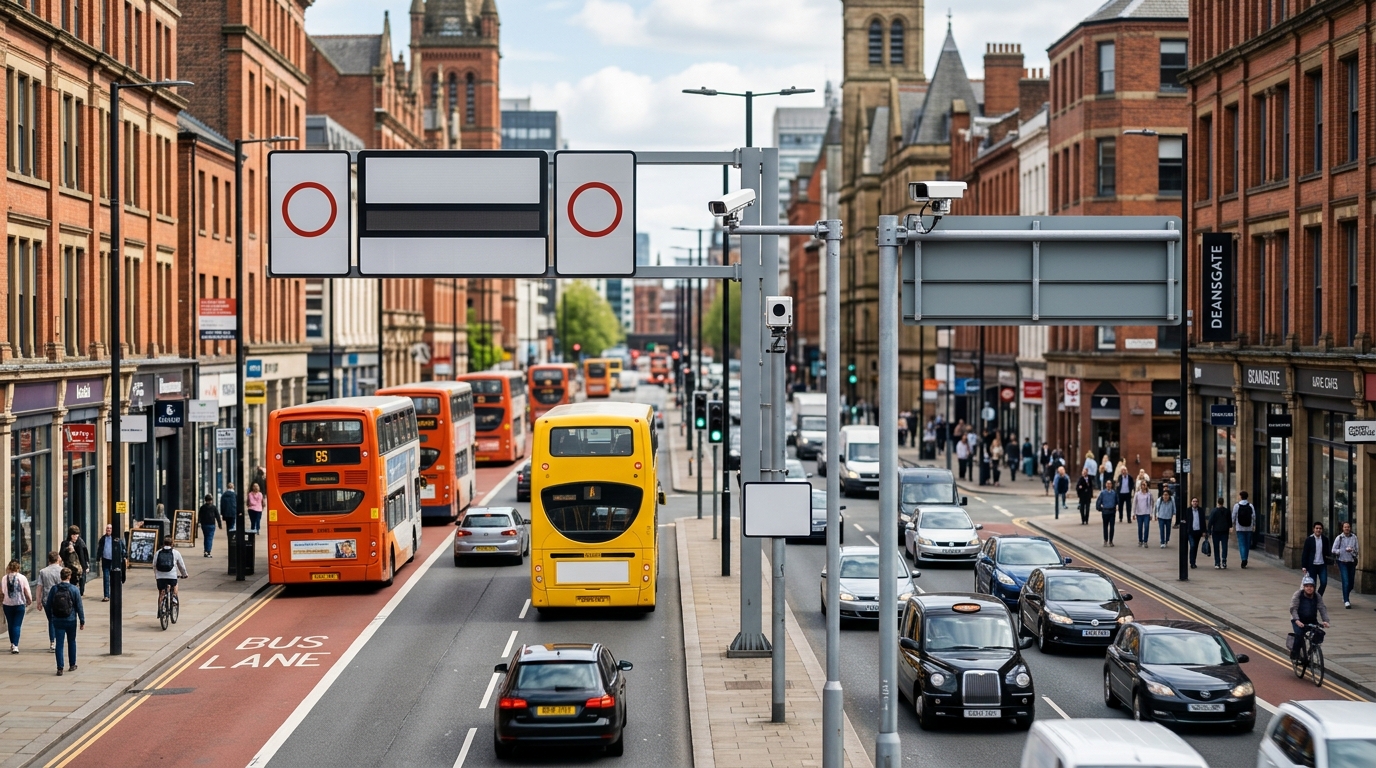
How L Team Driving School Builds Manchester Congestion Charge Preparedness Into Every Lesson
At L Team, we do not just prepare you to pass a test. We prepare you for real driving in a real city, and that includes everything that city throws at you.
Our instructors have extensive knowledge of Manchester’s road network, including the routes and zones that featured most heavily in the Clean Air Zone plans. When you learn with us, you will cover these areas as part of your normal lesson programme, so nothing on the road ever catches you off guard.
We cover key areas including Medlock, Gorton, Denton, and Clifton, giving you hands-on experience across the full range of Manchester road conditions.
Our driver resources are also available to help you stay informed about road safety and transport changes as they happen. We keep our materials current so you always have access to the most relevant guidance.
Whether you are a complete beginner or brushing up on your skills, we will get you to test standard and beyond, fully prepared for every aspect of driving in Manchester in 2026.
Awareness
Manchester Congestion Charge Preparedness is about more than just knowing whether a charge is in operation today. It is about building the awareness, the knowledge, and the driving skills to handle whatever Manchester’s roads and transport policies demand of you, now and in the years ahead.
The clean air progress Manchester has made is genuinely impressive, and the city’s approach of investing in better transport rather than penalising drivers has won broad public support. But the infrastructure is in place, the policy conversations continue, and 2026 is the year every Manchester driver should be getting properly informed.
At L Team, your Manchester Congestion Charge Preparedness starts from your very first lesson. Whether you’re just starting out with driving lessons in Manchester or building on existing skills, we teach you the routes, the zones, the real-world road conditions, and the confident driving mindset that means you are never caught short. Get in touch with L Team Driving School today, and let’s get you ready for every road in Manchester, ASAP and SAFE.
Frequently Asked Questions
Is there a congestion charge in Manchester in 2026?
No, there is no active congestion charge in Manchester in 2026. The Greater Manchester Clean Air Zone charging scheme was officially cancelled following public opposition. However, Manchester Congestion Charge Preparedness remains important because the ANPR infrastructure is still in place and road user charging remains a national policy option.
How much did Manchester spend on the congestion charge before it was cancelled?
Manchester spent £104.5 million on the Clean Air Zone before it was officially cancelled. This money covered ANPR camera installation, planning, infrastructure, and consultation processes, none of which resulted in a live charging scheme.
What does Manchester Congestion Charge Preparedness mean for learner drivers?
Manchester Congestion Charge Preparedness for learner drivers means understanding road zone geography, knowing which areas were within proposed charge boundaries, and building the route knowledge to adapt if any future scheme is introduced. At L Team, we cover all of this as part of our standard Manchester driving lessons curriculum.
Which Manchester areas were inside the proposed Clean Air Zone?
The proposed Clean Air Zone covered central Manchester and extended to areas including Salford, Trafford Park, Stockport, Oldham, Chorlton, and Didsbury. Manchester Congestion Charge Preparedness means knowing these areas and the routes that connect them, something our local instructors build into every lesson.
Will Manchester introduce a new congestion charge in the future?
It is possible. Road user charging is an active national policy debate in 2026, and Greater Manchester authorities continue to discuss long-term transport funding options. The best Manchester Congestion Charge Preparedness strategy is to check your vehicle’s emission standard now, learn your routes, and stay updated via TfGM.
How do I check if my car would be exempt from a Manchester congestion charge?
You can check your vehicle’s Euro emission standard using your registration plate on the DVLA website. As a general guide, petrol cars registered after 2006 (Euro 4+) and diesel cars registered after 2015 (Euro 6+) were considered compliant under the original Clean Air Zone proposals. Electric vehicles are always exempt under any current charging framework in the UK.
How is Manchester improving air quality without a congestion charge?
Manchester is improving air quality primarily through the Bee Network bus franchise, which has seen 14% year-on-year growth in ridership and is moving towards a fully zero-emission fleet. NO2 exceedance sites fell from 129 in 2019 to just 38 in 2025, showing that Manchester Congestion Charge Preparedness can include supporting better public transport as a genuine alternative to daily car journeys into the city.
Need to book a Driving Lesson?
Contact us Now
Tel: 03334049786