
Mastering how to perform perfect reverse bay parking for your test is one of the biggest challenges any learner faces, and you are NOT alone in that. A staggering 32% of drivers actively avoid reverse bay parking altogether, ranking it as one of the most dreaded manoeuvres on the road. At L-Team Driving School, our Driving Lessons Manchester programme tackles this manoeuvre head-on, turning apprehensive learners into confident drivers who ace their tests.
Key Takeaways
- Reverse bay parking IS on your test: The examiner may ask you to reverse into a bay at the test centre or a public car park. You must be ready.
- Two directions, one rule: You can be asked to reverse bay park to the LEFT or to the RIGHT. Both use the same core technique with mirrored reference points.
- Observation is EVERYTHING: All-round observation throughout the manoeuvre is what separates a pass from a fail.
- Reference points are your best friend: Knowing exactly WHERE to turn the wheel based on physical reference points removes guesswork entirely.
- Slow speed = more control: Creeping speed gives you TIME to observe, correct, and straighten up accurately.
- Practice makes permanent: The more you repeat the manoeuvre correctly, the more automatic and calm it becomes under pressure.
- L-Team gets results: We take pride in our exceptional 90% first-time pass rate, surpassing the national average by more than double, and reverse bay parking is a core part of what we teach.
What Is Reverse Bay Parking and Why Does It Matter for Your Test?
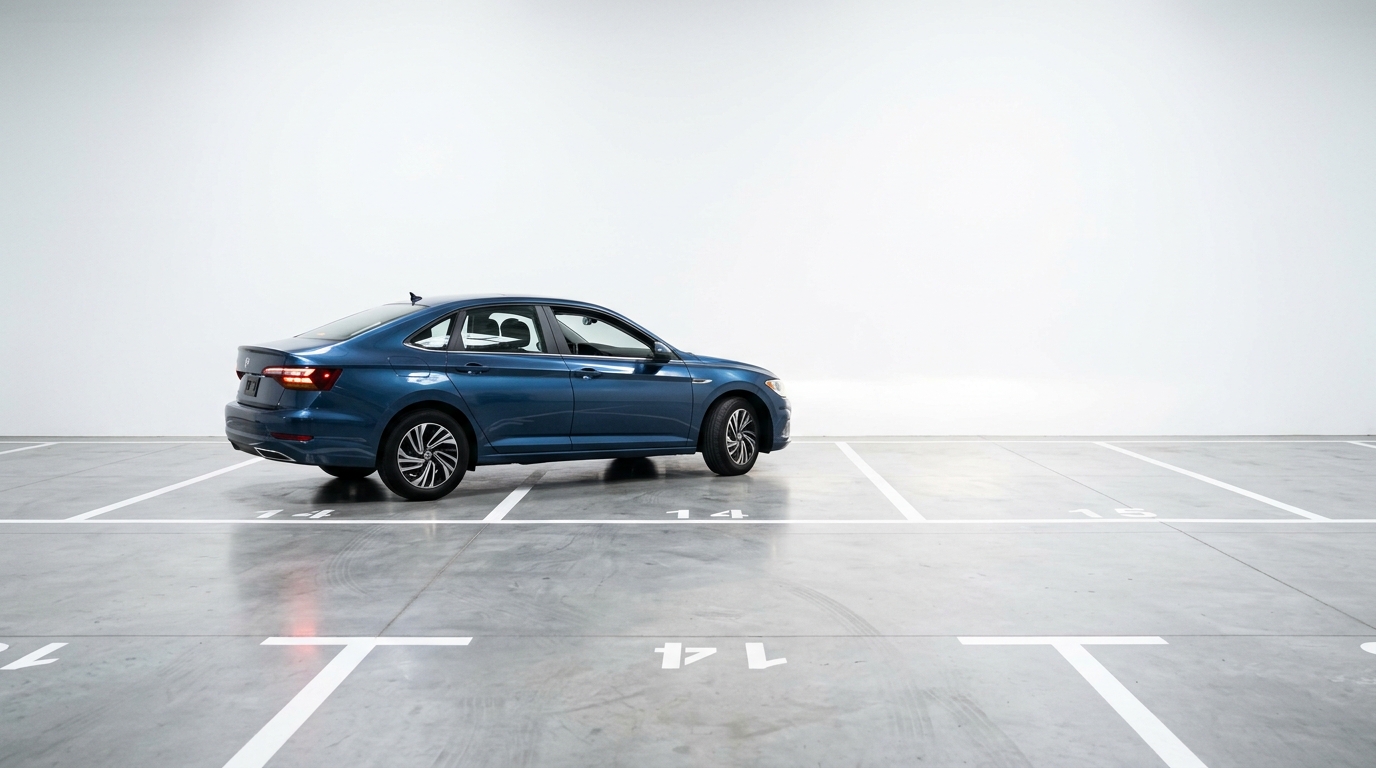
Reverse bay parking is the manoeuvre where you reverse your vehicle into a marked parking bay, either at the driving test centre or a public car park. The DVSA introduced it as a standard test manoeuvre because it is a situation you cannot avoid as a licensed driver.
You will encounter car parks every single day after you pass. If you cannot reverse bay park with confidence, your life as a driver becomes instantly more stressful. The examiner is looking for accuracy, control, and SAFE all-round observation.
Our driving test manoeuvres explained guide covers all the manoeuvres you may face on test day, but reverse bay parking deserves its own deep-dive. That is exactly what we are giving you here.
How to Perform Perfect Reverse Bay Parking for Your Test: Step-by-Step
Here is the EXACT method our instructors teach during Driving Lessons Manchester. Follow this and you will not go wrong.
Step 1: Choose Your Bay and Position the Car
Pull up alongside the row of bays, approximately one car’s width away from the line of parked cars. Aim to stop with the middle of your car level with the third line of the bay you intend to reverse into.
This gives you the correct angle and space to begin your reverse. Do NOT rush this positioning step. Get it right here and the rest follows naturally.
Step 2: Select Reverse and Begin Your Observations
Before you move an inch, check ALL mirrors, then physically look over your LEFT shoulder, over your RIGHT shoulder, and straight out of the rear window. This 360-degree check is NON-NEGOTIABLE for the examiner.
Continue those checks THROUGHOUT the entire manoeuvre. Pedestrians, cyclists, and other vehicles can appear at any moment. The examiner will fail you for poor observation, full stop.
Step 3: Apply Full Lock and Begin Reversing Slowly
Reversing bay parking to the LEFT? Apply FULL LEFT LOCK the moment you begin to move. Reversing to the RIGHT? Apply FULL RIGHT LOCK. The car needs maximum steering input at the start to swing the rear into the bay correctly.
Keep your speed to an absolute creep. Biting point control or a very gentle use of the accelerator is all you need. Speed kills accuracy on this manoeuvre.
Step 4: Watch Your Reference Points and Straighten Up
As the bay lines come into view through your mirrors and rear window, use your reference points (see the section below) to judge when to start straightening the wheel. Begin to bring the steering back to straight so the car is aligned with the bay lines.
Once the car is straight and sitting inside the bay, apply a small amount of opposite lock to stabilise the steering. Reverse slowly until the front of the car clears the bay line at the front.
Step 5: Final Position Check
Look in BOTH mirrors. Are you within the bay lines? Is the car reasonably central? If you are slightly off, you can make a small correction now. Apply the handbrake and tell the examiner you have completed the manoeuvre.
Did You Know?
Heart rates surge by an average of 46% when performing a reverse bay parking manoeuvre, indicating extremely high levels of physiological stress in learners and even experienced drivers.
Source: Intelligent Instructor
The Reference Points You NEED for Perfect Reverse Bay Parking
Reference points are the specific visual cues on your car that tell you WHERE you are in relation to the bay lines. Without them, you are guessing. With them, you perform the manoeuvre with precision EVERY TIME.
Adequate practice prepares students for any circumstances or difficult traffic situations without breaking a sweat or getting instantly nervous. That is exactly what reference points deliver on a manoeuvre like this.
Key Reference Points for Reversing Left into a Bay
- The passenger side mirror: When you can see the bay line running under the mirror and aligned with the edge of the car, you are in the correct start position.
- The rear left corner: As you reverse, watch the left bay line in your left mirror. The line should track alongside your car’s rear corner as you go in.
- The centre of the rear windscreen: When the bay line appears in the centre of your rear screen, begin to straighten the wheel.
Key Reference Points for Reversing Right into a Bay
- The driver’s side mirror: Use the right bay line appearing in the driver’s mirror to judge your start position.
- The rear right corner: The right bay line should track alongside the rear right corner of the car as you reverse.
- Straightening cue: When the bay lines appear equally either side in your mirrors, bring the wheel back to straight.
Every learner’s reference points can differ slightly depending on their height and seat position. Our instructors personalise these reference points during Driving Lessons Manchester so they work SPECIFICALLY for you in YOUR car. That individual approach is a core part of how we set up every student’s individual syllabus from the very first lesson.
Common Mistakes That Fail Learners During Reverse Bay Parking on Their Test
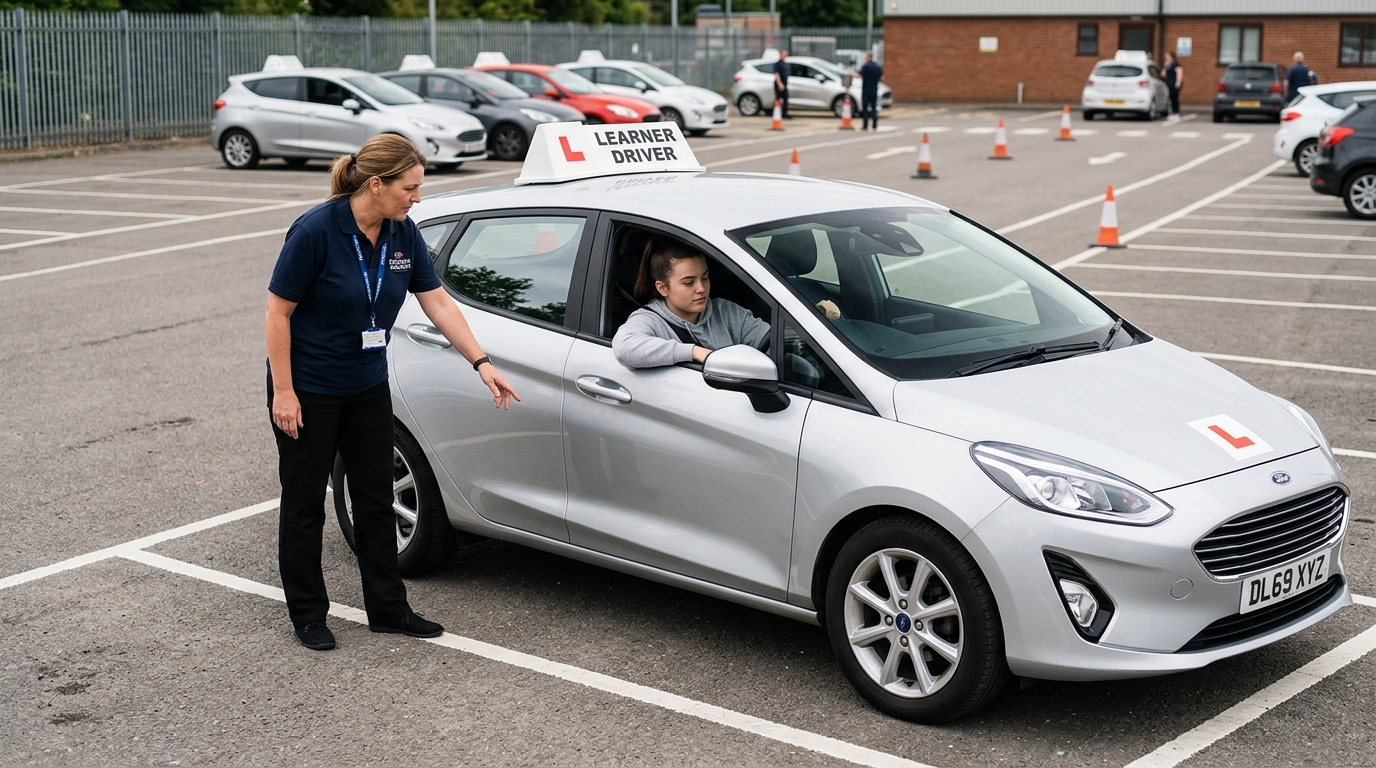
Knowing what NOT to do is just as important as knowing the correct technique. Here are the most frequent errors we see when students are learning how to perform perfect reverse bay parking for their test.
- Going too fast: Speed removes your ability to observe and correct. Slow DOWN.
- Not enough observation: Forgetting to look around before moving, or stopping observations mid-manoeuvre, is an instant serious fault.
- Poor start position: If you begin from the wrong position, no amount of steering correction will save you. Get the start position RIGHT.
- Straightening the wheel too early or too late: This leaves you diagonal in the bay. Practice your reference points until the timing is automatic.
- Panicking and speeding up: When things start going wrong, the natural response is to rush. Do the OPPOSITE. Slow down, stop, reassess.
- Not correcting when you still can: You ARE allowed to make a shunt forward and re-enter the bay if you are wildly out of position. Use it if you need to.
Check out our full guide on what to expect on the day of your practical driving test so you know exactly how the examiner assesses every element of your drive, not just the manoeuvre.
How Driving Lessons Manchester at L-Team Prepare You for Reverse Bay Parking
Our team comprises friendly, professional instructors dedicated to the common goal of transforming apprehensive learners into proficient drivers who ace their tests. Reverse bay parking is one of the manoeuvres we drill in every single lesson programme.
We use dual controls in our tuition vehicles, which means our instructors can intervene safely if needed during early practice sessions. This removes the anxiety and lets you FOCUS on learning the technique rather than worrying about making a mistake.
Our 90% first-time pass rate does not happen by accident. It happens because we cover manoeuvres like reverse bay parking PROPERLY, repeatedly, and with individual feedback tailored to each student. We write an individual syllabus for every learner once we assess their starting level, so you always know exactly what you are working on and why.
Whether you prefer manual or automatic, our instructors know how to coach the manoeuvre in both. The technique is the same, but the feel of the car differs. We make sure you are 100% comfortable regardless of which you drive on test day.
If you want to get to test-ready level FAST, our intensive driving courses in Manchester give you concentrated, back-to-back lessons that fast-track your manoeuvre skills. This deal will have you on the road in no time.
Did You Know?
23% of drivers have abandoned a parking attempt altogether because the manoeuvre felt too difficult to complete, highlighting just how much proper training matters.
Source: Driving.org
What the Examiner Looks for During Reverse Bay Parking on Your Driving Test
The examiner is NOT looking for perfection in the sense of perfect geometry. They ARE looking for SAFE and CONTROLLED execution. Here is exactly what is being assessed.
| Assessment Area | What They Want to See | Common Fault |
|---|---|---|
| Observation | All-round checks before and throughout | Stopping observations mid-manoeuvre |
| Control | Slow, smooth, consistent speed | Rushing or coasting out of control |
| Accuracy | Car reasonably central within bay lines | Straddling a line or at a steep angle |
| Response to hazards | Stopping when pedestrians or cars appear | Continuing to move when the path is unsafe |
| Use of MSM | Mirror, Signal, Manoeuvre routine applied | Forgetting mirrors before any movement |
The examiner WANTS you to pass. They are not trying to catch you out. Show them you are SAFE and IN CONTROL, and you will be fine.
Performing Perfect Reverse Bay Parking: How to Practice Effectively Between Lessons
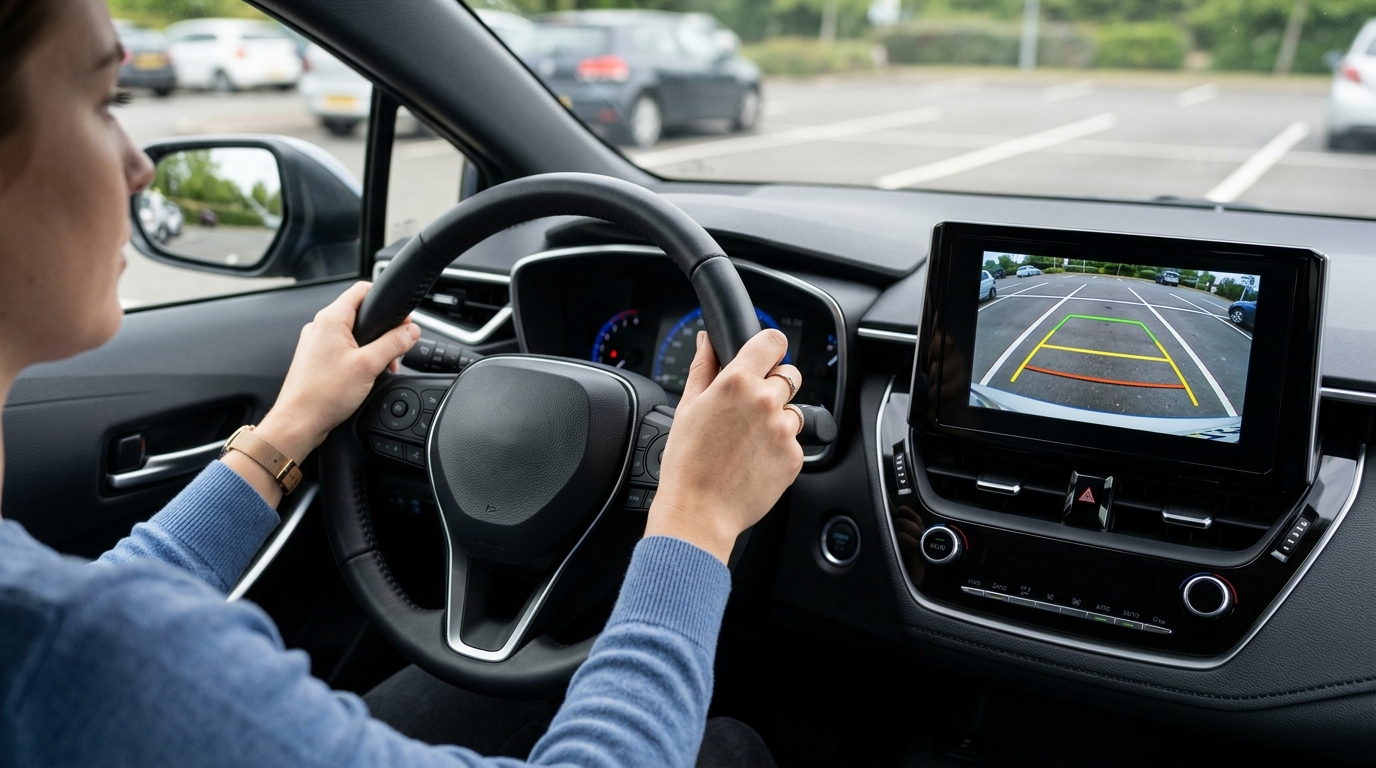
Knowing how to perform perfect reverse bay parking for your test is one thing. Getting enough repetitions in to make it feel natural under pressure is another. Here is how to maximise your practice time.
Use Quiet Car Parks
Empty supermarket car parks early in the morning or late at night are ideal. No traffic pressure, clear bay markings, and plenty of space to repeat the manoeuvre over and over. This is where reference points become automatic.
Practice BOTH Directions
Do not just practice reversing left because it feels easier. The examiner can ask for either direction. Make sure you are equally confident with both. Spend dedicated practice time on the direction that feels harder.
Practise Stopping and Reassessing
If you go out of position during practice, deliberately stop and decide: can I correct from here, or should I pull forward and start again? Making that decision calmly in practice means you will make it calmly on test day.
Ask Your Instructor to Observe Your Private Practice
If you are practising with a parent or friend, ask your L-Team instructor to observe a session and give feedback. Small errors in technique can become habits quickly. Catching them early saves time. Our aim is for you to pass as soon as you can and for us to get recommendation work, so every session counts.
If you are wondering whether an intensive course might accelerate your learning, read our breakdown on intensive driving courses vs normal driving courses to see which suits your situation best.
How to Perform Perfect Reverse Bay Parking for Your Test: The Mental Side
The 46% heart rate spike statistic above tells you everything. Reverse bay parking is stressful. The physical technique is learnable. The MENTAL side is where most learners struggle on test day specifically.
Here is what we tell every student at L-Team: the examiner has already seen this manoeuvre thousands of times. A minor wobble is NOT an automatic fail. A shunt to correct your position is NOT an automatic fail. Seriously poor observation and loss of control IS.
Breathe. Slow down. Look around. Trust the reference points you have practised. This will help YOU stay safe AFTER the driving test too, because parking in busy real-world car parks carries exactly the same risks.
THE L TEAM DRIVING SCHOOL’S MISSION is to get you there ASAP and SAFE. That applies as much to the reverse bay parking manoeuvre as it does to every other element of your test preparation.
Nail Your Reverse Bay Parking and Pass Your Test
Learning how to perform perfect reverse bay parking for your test is completely achievable when you break it down into clear steps, practice your reference points, and keep your observations sharp throughout. The technique is repeatable, predictable, and entirely within your control.
At L-Team Driving School, our Driving Lessons Manchester programme has one goal: to get you through that test with a PASS on the board. We take pride in our exceptional 90% first-time pass rate, surpassing the national average by more than double, and reverse bay parking is one of the core skills we make sure every student has locked in before test day.
Mastering it starts with quality instruction one of the highest-rated driving schools in Manchester will make sure you practise this manoeuvre correctly long before test day. Do not let reverse bay parking be the reason you put off booking your test. Practise this manoeuvre under exam conditions with our number 1 intensive driving programme and arrive on test day knowing exactly what to expect. Book your Driving Lessons Manchester with L-Team today and let us sort it out together. Check out our test fees page to see everything you need to budget for and get started on the road to your licence ASAP.
Frequently Asked Questions
How do I perform perfect reverse bay parking for my driving test?
To perform perfect reverse bay parking for your test, position the car one bay’s width from the line of parked cars, begin reversing with full lock toward your chosen bay, use your mirror reference points to judge when to straighten, and maintain slow speed with all-round observation throughout. Practising this routine until the reference points feel automatic is the key to getting it right under pressure on test day.
Will I definitely be asked to do reverse bay parking on my driving test?
Reverse bay parking is one of the possible manoeuvres the examiner can ask you to perform, but it is not guaranteed on every test. However, you must be prepared for it because you have no way of knowing which manoeuvre will be selected. Our driving test manoeuvres guide covers all the options so you are ready for anything.
Can I fail my driving test for reverse bay parking?
Yes, you can receive a serious or dangerous fault for reverse bay parking if you show poor observation, lose control of the vehicle, or cause a hazard to another road user. A minor error in accuracy alone is unlikely to fail you, but combined with poor observation it can. The safest approach is to keep your speed low and your observations constant throughout.
How many times can I shunt forward during reverse bay parking on my test?
There is no set limit on the number of shunts you can make, but excessive corrections will be noted by the examiner as a lack of accuracy and control. One clear shunt to straighten up a poor angle is generally acceptable. The goal is to get the manoeuvre as right as possible from the start by using your reference points consistently.
What is the difference between reverse bay parking left and right?
Reverse bay parking to the left means you swing the rear of the car to the left into the bay using full left lock, while reversing to the right uses full right lock to swing the rear in the opposite direction. The same reference point logic applies to both, just mirrored. You should practice both directions during your driving lessons because the examiner can ask for either.
How long does it take to learn how to reverse bay park perfectly?
Most learners can grasp the basics of how to perform reverse bay parking within a few dedicated lessons, but reaching the consistency needed for test performance typically takes more repetitions across several sessions. Adequate practice prepares students for any circumstances without breaking a sweat, and that level of confidence comes from repeated correct practice rather than a fixed number of hours.
Is reverse bay parking harder in an automatic or manual car?
The steering technique for reverse bay parking is identical in both automatic and manual cars. In a manual, you have the additional task of clutch control at very slow speeds, which some learners find adds pressure. In an automatic, slow-speed control is generally easier since you only need to manage the brake. Both are entirely achievable with the right instruction and practice.
Need to book a Driving Lesson?
Contact us Now
Tel: 03334049786