
Taking a driving test can feel overwhelming when you don’t know what the examiner is thinking. Many learners spend weeks practising manoeuvres and mirror checks but forget to understand what examiners actually want to see behind the wheel. If you’re not sure what to expect on your practical driving test, it helps to first understand the structure of the test itself.

Driving examiners look for candidates who can drive safely without supervision, demonstrate good control under pressure, and show they can make independent decisions on the road. They’re not trying to catch you out or fail you – they want to see that you’re ready to drive alone.
Understanding an examiner’s priorities and mental checklist can boost your confidence and improve your chances of success. From the specific skills they assess to the behaviours that impress or concern them, knowing what goes through an examiner’s mind helps you prepare more effectively for test day.
Examiner Expectations: What They’re Really Assessing
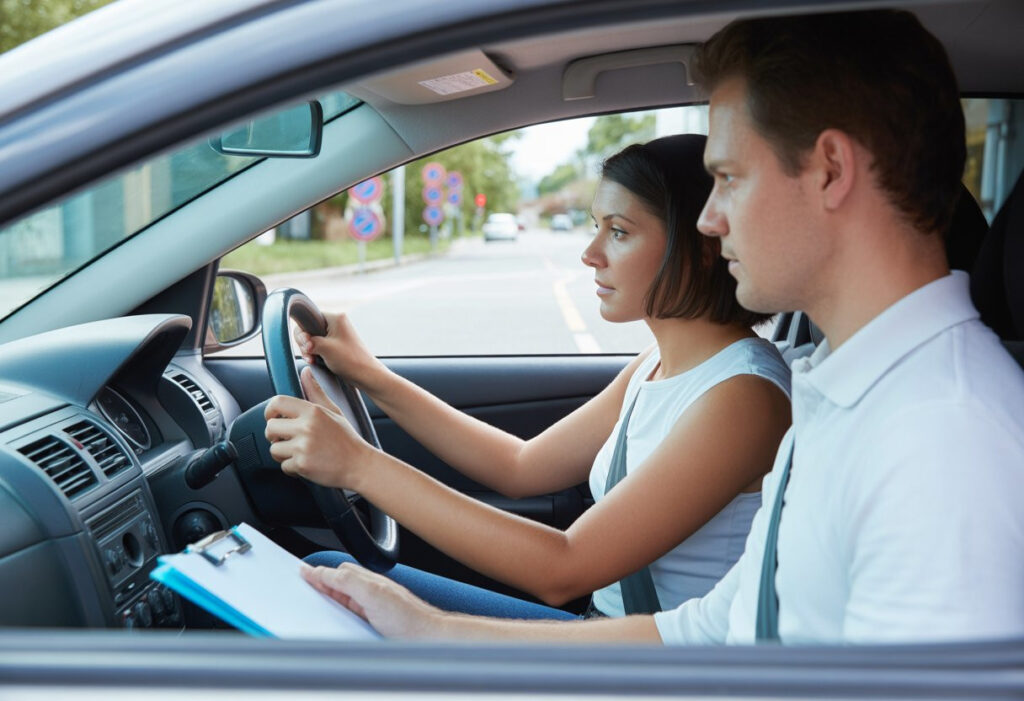
Driving test examiners focus on specific skills rather than perfection. They look for safe driving habits, proper decision-making, and the ability to recover from minor errors without panicking.
Core Competencies Every Examiner Observes
Examiners assess five key areas during every driving test. These areas form the foundation of safe driving skills.
Vehicle control comes first on their checklist. They watch how candidates handle the steering wheel, pedals, and gears. Smooth acceleration and braking matter more than perfect timing.
Observation skills rank as the second priority. Examiners note whether candidates check mirrors regularly. They look for proper use of blind spot checks before changing lanes or turning.
Positioning and speed form the third assessment area. Candidates must maintain proper lane position and adjust speed for road conditions. Driving too slowly can fail a test just like speeding.
Traffic signs and signals require constant attention. Examiners expect candidates to spot and respond to all road signs. Missing a stop sign or speed limit change results in immediate failure.
Hazard awareness completes the core competencies. Candidates must identify potential dangers like pedestrians or cyclists. Quick recognition and appropriate response demonstrate advanced driving skills.
Common Misconceptions About Evaluation
Many candidates believe examiners want perfect driving throughout the test. This belief creates unnecessary pressure and often leads to worse performance.
Examiners understand that minor errors happen during normal driving. They allow for small mistakes like slightly uneven steering or gentle kerb contact whilst parking.
Speed misconceptions cause frequent failures. Candidates often drive too slowly thinking it shows caution. Examiners prefer confident driving at appropriate speeds for conditions.
Some believe examiners have daily quotas for passes and fails. This is completely false. Each test receives independent assessment based purely on driving performance.
Candidates sometimes think examiners prefer certain routes or times of day. The assessment criteria remain identical regardless of when or where the test occurs.
The Importance of Calmness and Recovery
Examiners specifically watch how candidates handle mistakes during the test. Recovery skills often matter more than avoiding errors completely.
When candidates make minor mistakes, staying calm demonstrates maturity. Panicking after a small error often leads to more serious problems immediately afterwards.
Proper recovery involves acknowledging the mistake mentally and continuing with normal driving. Candidates should not apologise repeatedly or become visibly upset during the test.
Examiners note whether candidates learn from mistakes during the same test. Making the same error multiple times suggests poor learning ability and awareness.
Breathing techniques help maintain composure throughout the assessment. Candidates who stay relaxed make better decisions and demonstrate more natural driving behaviour. That composure comes from proper preparation – working with a school consistently recommended by learners across Manchester means you walk into the test having already experienced pressure in real road conditions.
Thinking Like an Examiner: Mental Checklist and Priorities
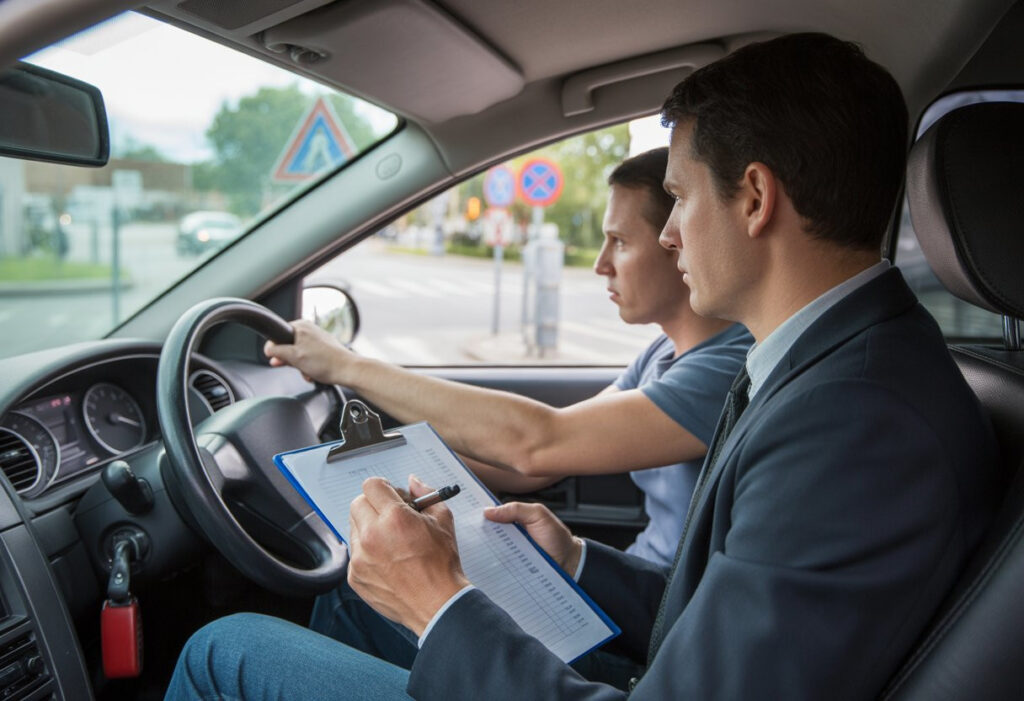
Driving examiners follow a systematic approach during tests, focusing on safety-critical observations and consistent marking standards. One of the best ways to prepare is to find out how a mock test helps you think like an examiner before the real thing.
What Goes Through an Examiner’s Mind
The examiner begins assessing candidates before they even start the engine. They observe how the candidate approaches the vehicle and conducts safety checks.
During the test, examiners focus on continuous assessment rather than isolated incidents. They watch for patterns in behaviour and consistency in driving standards.
Key mental checkpoints include:
- Mirror usage frequency and timing
- Speed awareness and adjustment
- Position on the road
- Response to hazards
- Communication with other road users
Examiners note whether candidates make deliberate, conscious decisions. They distinguish between minor lapses and fundamental safety concerns.
The examiner considers the candidate’s ability to adapt to different road conditions. They assess confidence levels and how well learners handle unexpected situations.
The Role of Safety and Decision Making
Safety remains the examiner’s primary concern throughout the test. They evaluate whether the candidate poses a risk to themselves or other road users.
Critical safety indicators:
- Following distances maintained
- Appropriate speed for conditions
- Effective observation at junctions
- Response to pedestrians and cyclists
Examiners assess decision-making processes in real-time scenarios. They look for evidence that candidates can think ahead and plan their actions.
Good decision-making involves recognising hazards early and taking appropriate action. Examiners notice when candidates hesitate unnecessarily or make impulsive choices.
The examiner evaluates whether safety decisions stem from understanding or mere habit. They prefer candidates who demonstrate genuine road awareness over those who simply follow routines.
Balancing Minor and Major Faults
Examiners categorise faults based on potential danger and frequency. They use established criteria to ensure consistent marking across all tests.
Minor faults include small positioning errors or slightly late signalling. These become serious when repeated frequently or in dangerous situations.
Major faults involve immediate danger or assistance from the examiner. Examples include approaching junctions at dangerous speeds or failing to give way when required.
Examiners consider context when marking faults. A minor positioning error on a quiet road differs from the same error near a school.
The accumulation of minor faults indicates poor driving habits. Understanding the top reasons people fail their UK driving test can help you identify and fix these habits before test day.
They also assess whether candidates recognise and correct their own mistakes. Self-awareness and immediate improvement can influence how faults are recorded.
Key Driving Skills Under Scrutiny
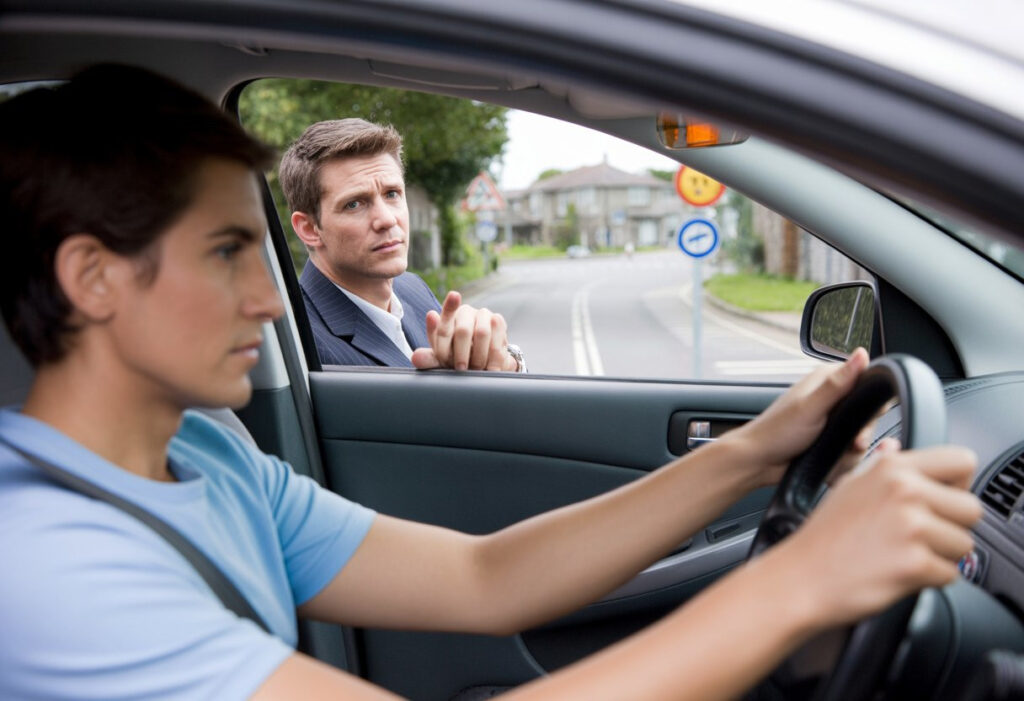
Driving examiners assess specific abilities that demonstrate safe, independent driving. They focus on how candidates observe their surroundings, control their vehicle, communicate intentions clearly, and respond to changing traffic situations.
Observation and Awareness
Examiners watch how candidates scan the road environment and process information. They look for regular mirror checks before changing direction or speed.
Effective observation means checking mirrors every 8-10 seconds during normal driving. Candidates should look further ahead than just the car in front.
Critical observation points include:
- Checking mirrors before signalling
- Looking over shoulders when reversing
- Scanning junctions before emerging
- Spotting pedestrians at crossings
- Identifying hazards early
The examiner notes whether the candidate reacts appropriately to what they see. Simply looking isn’t enough – drivers must respond to hazards and changing conditions.
Good awareness shows through smooth adjustments to speed and position. Candidates who brake suddenly or swerve have likely missed earlier warning signs.
Vehicle Control and Manoeuvres
Smooth vehicle control demonstrates competence and confidence. Examiners assess how candidates handle the steering wheel, pedals, and gear changes.
Key control areas include:
- Smooth acceleration and braking
- Appropriate use of gears
- Accurate steering input
- Proper clutch control (manual cars)
- Effective use of handbrake
During manoeuvres, examiners look for precision and safety. The candidate must complete reversing exercises without hitting kerbs or other vehicles.
Parking manoeuvres test slow-speed control and spatial awareness. Examiners expect candidates to position the car accurately whilst checking for pedestrians and traffic.
Hill starts reveal clutch control and judgement. The car shouldn’t roll backwards or stall when moving off on slopes.
Use of Mirrors and Signals
Clear communication prevents accidents and shows consideration for other road users. Examiners check that candidates signal at the right time and in the correct sequence.
The proper sequence is Mirror-Signal-Manoeuvre. Candidates must check mirrors first, then signal their intention, then act.
Signals should be given with enough time for others to react. Signalling too late or too early can confuse other drivers.
Common signalling mistakes:
- Forgetting to cancel indicators
- Signalling whilst already turning
- Using wrong signals at roundabouts
- Not signalling when required
Mirror use must be purposeful, not just for show. Examiners can tell when candidates check mirrors but don’t process the information they see.
Adapting to Changing Road Conditions
Skilled drivers adjust their approach based on weather, traffic, and road conditions. Examiners observe how candidates modify their speed and following distances.
In wet conditions, stopping distances increase significantly. Candidates should leave larger gaps and reduce speed appropriately.
Heavy traffic requires patience and smooth movements. Aggressive driving or excessive hesitation both create problems.
Adaptation includes:
- Reducing speed in poor visibility
- Increasing following distances in wet weather
- Adjusting for narrow roads
- Responding to temporary traffic lights
- Dealing with cyclists and pedestrians
School areas and residential streets need different approaches than dual carriageways. The examiner expects candidates to recognise these differences and drive accordingly.
Night driving or poor weather conditions test how well candidates use lights and adjust their driving style to maintain safety.
Behaviours That Impress or Concern Examiners
Driving examiners assess specific behaviours that demonstrate road safety and competence. Clear road positioning, quick hazard responses, and professional communication significantly influence test outcomes.
Demonstrating Confident Road Positioning
Examiners watch closely for proper lane positioning throughout the test. Candidates should maintain consistent distance from kerbs and stay centred in their lane.
Key positioning behaviours include:
- Staying 1-1.5 metres from the kerb on normal roads
- Moving smoothly between lanes when required
- Positioning correctly at junctions and roundabouts
Hesitant or erratic positioning raises immediate concerns. Driving too close to parked cars or drifting between lanes shows poor spatial awareness.
Confident positioning means making deliberate adjustments for road conditions. This includes moving slightly left for cyclists or right when passing large vehicles.
Examiners note whether candidates check mirrors before adjusting position. Good drivers signal their intentions early and position themselves gradually rather than making sudden movements.
Responding to Hazards Effectively
Quick hazard recognition impresses examiners more than perfect parking. Candidates must spot potential dangers early and react appropriately.
Effective hazard responses demonstrate:
- Scanning ahead continuously for pedestrians, cyclists, and vehicles
- Reducing speed when approaching schools or busy areas
- Maintaining safe following distances in all conditions
Delayed reactions concern examiners significantly. Braking harshly or failing to notice pedestrians waiting to cross creates major test issues.
Good candidates anticipate problems before they develop. They slow down when children are playing nearby or when visibility is reduced.
Mirror checks before changing speed or direction show awareness. Examiners expect candidates to look, assess, and then act rather than simply reacting to immediate threats.
Polite Communication and Professionalism
Professional behaviour starts before the engine turns on. Examiners appreciate candidates who listen carefully to instructions and ask questions when unsure.
Clear acknowledgement of directions prevents misunderstandings. Simple responses like “yes” or “understood” show attentiveness without being overly chatty.
Professional behaviours include:
- Arriving on time with required documents
- Remaining calm when making minor errors
- Following instructions precisely without argument
Arguing with the examiner or making excuses damages test prospects. Candidates who blame road conditions or other drivers show poor responsibility.
Nervous chatter can distract from driving performance. Brief, polite responses work better than lengthy explanations or personal stories during the test.
Understanding Marking and Test Outcomes
Driving examiners follow strict marking systems to ensure fair and consistent test results. The pass or fail decision depends on specific fault categories and safety standards rather than subjective opinions.
How Marking Sheets Are Used
Examiners use standardised marking sheets during every driving test. These sheets contain specific areas that must be assessed throughout the test.
The marking sheet divides driving skills into different categories. Each category covers specific aspects like moving off, use of mirrors, and signalling.
Fault Categories:
- Minor faults – Small errors that don’t affect safety
- Serious faults – Potentially dangerous mistakes
- Dangerous faults – Actions that put people at risk
A candidate can accumulate up to 15 minor faults and still pass. However, just one serious or dangerous fault results in an immediate fail.
The examiner marks faults as they happen during the test. They use specific codes to record exactly what went wrong and where it occurred.
Typical Reasons for Passing or Failing
Most test failures occur due to observation errors and poor judgement. These issues often happen at junctions and roundabouts.
Common reasons for failing include:
- Not checking mirrors before manoeuvres
- Failing to observe pedestrians at crossings
- Poor positioning on the road
- Inadequate response to traffic signs
- Stalling the engine repeatedly
Candidates who pass typically demonstrate consistent safe driving. They show good awareness of other road users and follow the Highway Code properly.
Speed-related issues cause many failures. This includes driving too slowly as well as exceeding speed limits.
Debunking Common Driving Test Myths
Many candidates believe examiners have monthly quotas for passes and fails. This is completely false – examiners assess each test independently.
Common myths that are untrue:
- Tests are harder at month-end
- Examiners are stricter on Fridays
- Taking lessons with the test centre instructor helps
- Automatic cars are easier to pass in
The examiner’s personal mood does not affect results. They follow strict guidelines that ensure consistent marking standards.
Some people think minor faults in certain areas matter more than others. In reality, all minor faults carry equal weight regardless of where they occur.
Test centres do not have different standards. All examiners receive identical training and must maintain the same marking criteria across the country.
Frequently Asked Questions
Examiners evaluate specific driving skills and behaviours during practical tests. They focus on safety, control, awareness, and proper execution of standard manoeuvres whilst assessing knowledge of road rules.
What are the key criteria examiners use to assess driving test candidates?
Examiners assess candidates on four main areas: control of the vehicle, observation skills, use of speed, and following traffic rules. They check if drivers can handle the car smoothly without stalling or jerking movements.
Safety is the top priority during assessment. Examiners look for proper mirror checks, signal usage, and appropriate following distances.
Candidates must demonstrate they can drive independently without constant guidance. Examiners want to see confident decision-making and proper responses to traffic situations.
How can I demonstrate safe driving practices to satisfy the examiner during my test?
Check mirrors regularly, especially before changing lanes or turning. Signal early and clearly to show other road users your intentions.
Maintain safe following distances from other vehicles. Use the two-second rule as a minimum gap in normal conditions.
Keep both hands on the steering wheel when possible. Avoid sudden movements or harsh braking unless necessary for safety.
Observe speed limits carefully and adjust speed for road conditions. Drive slower in residential areas and near schools.
What common mistakes should I avoid to pass the driving test?
Avoid rolling through stop signs or failing to come to a complete stop. Many candidates lose points for not stopping fully at required locations.
Don’t forget to check blind spots before changing lanes or merging. Examiners specifically watch for head checks and shoulder glances.
Stalling the engine is common but not automatically a failure. Stay calm and restart the car safely if this happens.
Avoid mounting kerbs during parking or turning manoeuvres. Practice parallel parking and three-point turns until you can do them smoothly.
In what ways can I show situational awareness to the examiner?
Scan the road constantly by moving your eyes between mirrors, traffic, and potential hazards. Look ahead for pedestrians, cyclists, and changing traffic conditions.
Adjust your driving for weather and road conditions. Slow down in rain and increase following distances on wet roads.
Anticipate what other drivers might do. Watch for cars that might pull out or pedestrians who might cross unexpectedly.
React appropriately to road signs and markings. Show you understand lane restrictions and parking regulations.
What specific manoeuvres should I practise to excel in the driving test?
Practice parallel parking between two cars until you can do it smoothly. Many tests include this challenging manoeuvre.
Master the three-point turn in narrow roads. Keep the car under control and check for traffic throughout the manoeuvre.
Work on reversing around corners whilst maintaining proper observation. Check mirrors and look over your shoulder regularly.
Practice emergency stops when your instructor gives the signal. Keep the car straight and under control whilst stopping quickly.
How will the examiner gauge my understanding of traffic signs and signals?
Examiners watch how you respond to stop signs, yield signs, and traffic lights. They check if you follow the rules correctly at each type of sign.
Speed limit signs must be obeyed throughout the test. Examiners note if you drive too fast or unnecessarily slow for the posted limits.
Lane markings and road signs guide your driving decisions. Show you understand no-entry signs, one-way streets, and parking restrictions.
Traffic lights require proper responses including stopping at amber when safe to do so. Don’t rush through changing lights or stop suddenly without reason.
Need help with your driving test?
Contact us Now
Tel: 03334049786