
Learning road signs and traffic signals is one of the most important parts of preparing for your UK driving theory test. The DVSA theory test requires you to understand hundreds of different signs, signals, and road markings to demonstrate that you can drive safely on British roads. Before you sit your theory test, you’ll need to have completed enough practical hours with one of Manchester’s top-rated driving schools. Many learner drivers find this challenging because the sheer number of signs can feel overwhelming at first.
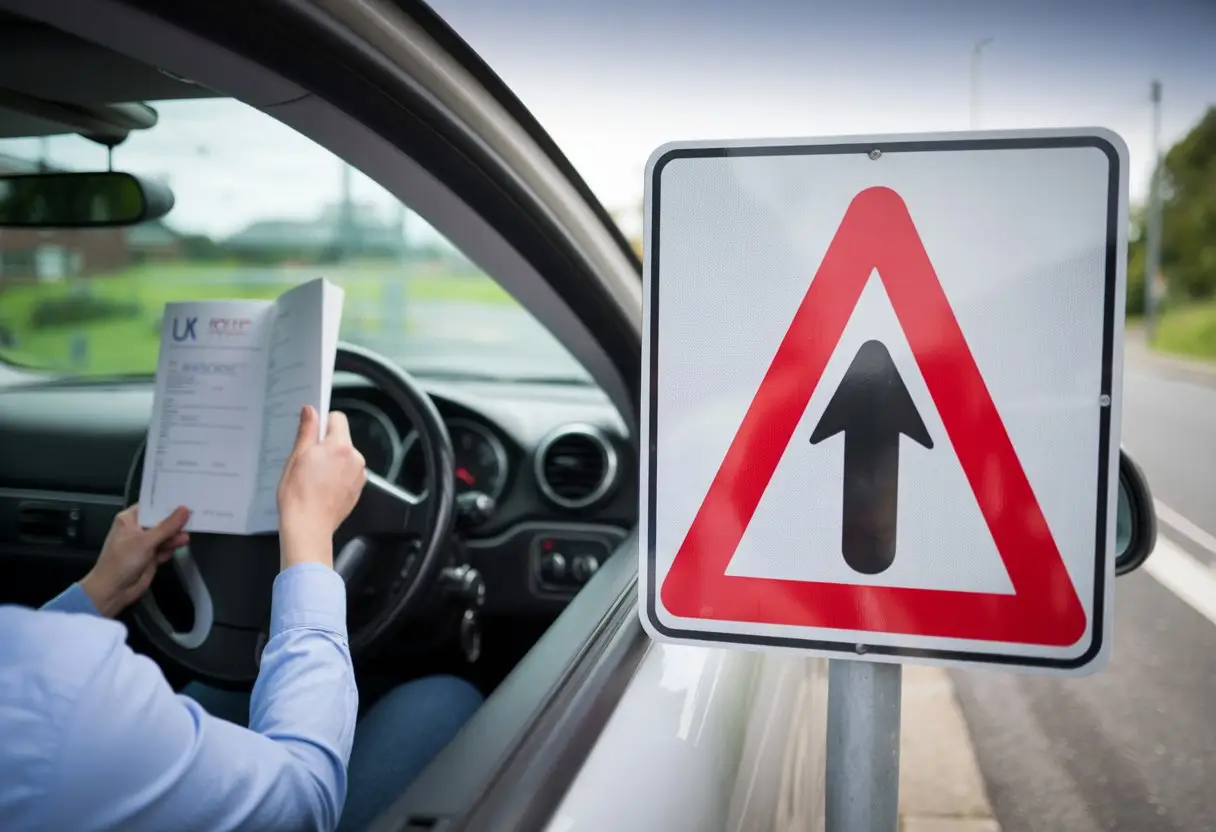
You need to know more than just what signs look like. Understanding what each sign means and how to respond when you see one is essential for passing your test and becoming a safe driver. Different signs serve different purposes, from warning you about hazards ahead to giving you legal instructions you must follow.
This guide breaks down everything you need to know about UK road signs, traffic signals, and road markings. You’ll learn about the different types of signs, what the most important ones mean, and how to remember them for your theory test and your future on the road.
Understanding Signs and Signals for the UK Theory Test

The driving theory test assesses your knowledge of road signs, traffic signals, and road markings through multiple choice questions. You’ll need to recognise different sign shapes, colours, and symbols, while understanding what actions they require you to take as a driver.
Role of Signs and Signals in the Driving Theory Test
Road and traffic signs make up one of the largest topics in your driving theory test. You’ll face questions about warning signs, regulatory signs, and directional signs throughout the exam. The test includes approximately 216 practice questions on this topic alone, and you need to answer a significant portion correctly to pass.
Signs are divided by their shapes and colours for quick recognition. Triangular signs typically warn you of hazards ahead. Circular signs give orders you must follow. Rectangular signs provide information about directions or locations.
Traffic signals work alongside road signs to manage traffic flow and keep you safe. You need to understand traffic lights, pedestrian crossings, and lane signals. The Highway Code explains how these signals work together with road signs to guide your driving decisions.
Essential Study Resources for New Drivers
The Highway Code serves as your primary reference for all UK road signs and signals. It contains the most commonly used signs you’ll encounter on British roads and motorways. You should study this resource thoroughly before attempting your theory test.
“Know Your Traffic Signs” is the official guide that illustrates and explains all important traffic signs, signals, and road markings. This resource covers both basic and advanced sign meanings. It’s available for new drivers and experienced road users who want to refresh their knowledge.
Key study materials include:
- Official DVSA practice questions and tests
- Interactive online quizzes with answers
- Road sign flashcards organised by category
- Mobile apps for learning on the go
Common Mistakes to Avoid When Interpreting Signs
Many learners confuse signs with similar shapes or colours. Red circular signs with red borders mean different things than red triangular signs. You must pay attention to both the shape and the specific symbol inside.
Speed limit signs and national speed limit signs cause frequent confusion. A red circle with a number shows the maximum speed allowed. A single diagonal black stripe on a white background means the national speed limit applies to that road.
Some learners forget that blue circular signs give mandatory instructions, not suggestions. These signs tell you what you must do, such as “turn left ahead” or “keep left.” Ignoring the difference between blue circular signs and blue rectangular information signs leads to wrong answers on the test.
You should avoid rushing through sign questions without reading them carefully. Two signs might look similar at first glance but require completely different actions from you as a driver.
The Different Types of UK Road Signs
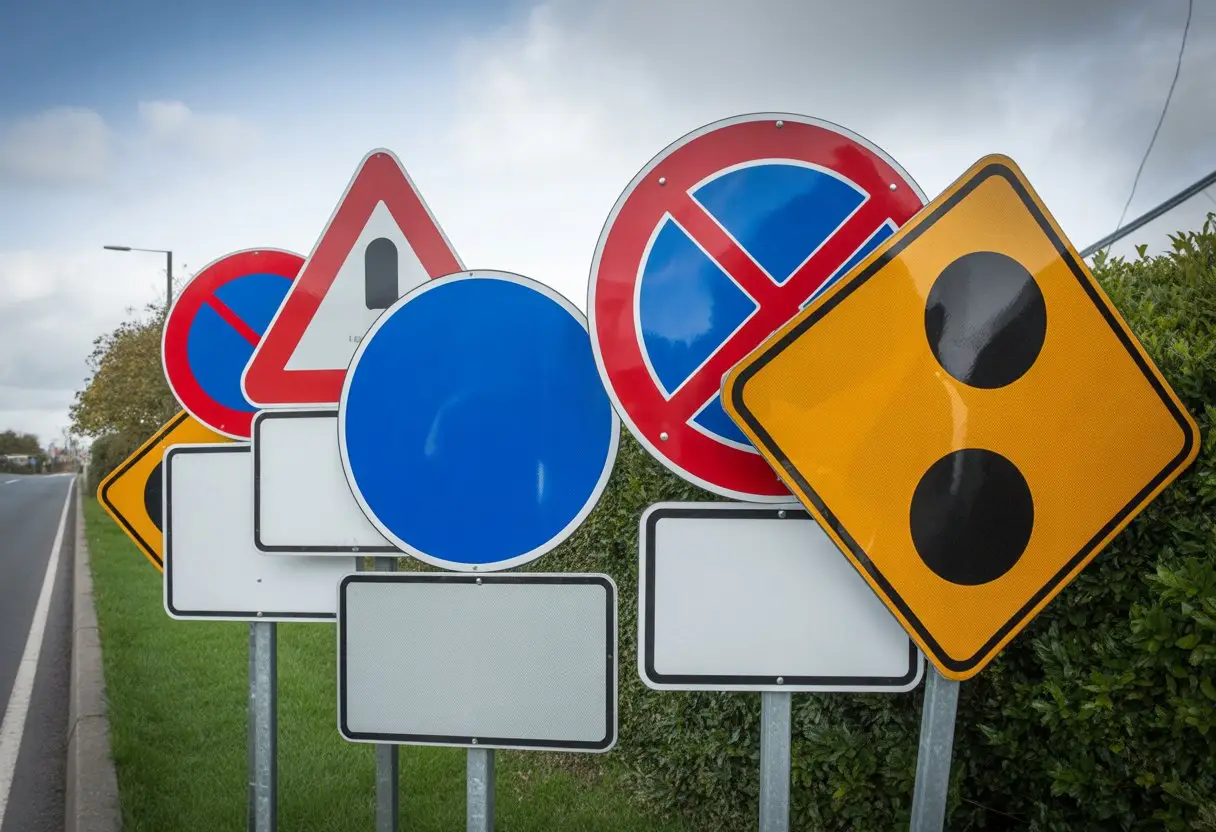
UK road signs fall into distinct categories based on their shape, colour, and purpose. Each type serves a specific function to keep roads safe and traffic flowing smoothly.
Regulatory Signs: Orders and Prohibitions
Road signs giving orders are the most critical signs you’ll encounter on UK roads. These signs tell you what you must or must not do whilst driving.
Circular signs are always regulatory. A red circle means prohibition—you cannot do something. Common examples include speed limits, no entry signs, and no stopping restrictions. A blue circle gives a mandatory instruction, such as “turn left ahead” or “keep left.”
Stop signs are octagonal and require you to come to a complete halt. Give way signs are triangular and point downwards. These shapes make them instantly recognisable, even when partially obscured.
You must follow all signs giving orders by law. Ignoring them can result in penalty points, fines, or more serious consequences. Speed limit signs, shown as numbers in red circles, are among the most common regulatory signs you’ll see.
Warning Signs and Their Meanings
Warning signs alert you to potential hazards ahead. They’re almost always triangular with a red border and white background.
These signs prepare you for what’s coming. You’ll see warnings for sharp bends, pedestrian crossings, road narrowing, and uneven surfaces. Animal crossing signs warn of cattle, deer, or wild horses in specific areas.
Junction warnings show you when side roads join the main carriageway. Some warning signs include distance plates underneath, telling you how far away the hazard is. Temporary warning signs at roadworks use yellow backgrounds instead of white to distinguish them from permanent hazards.
When you spot a warning sign, adjust your speed and position accordingly. These signs don’t give orders, but ignoring them is dangerous.
Information and Direction Signs
Information signs provide useful details about routes, facilities, and locations. Direction signs vary in colour depending on the type of road.
Motorway signs use blue backgrounds with white text. They show junction numbers, distances, and destinations. Primary routes (major A-roads) use green signs, whilst local routes use white signs with black text.
Emergency diversion routes appear when motorways or major roads close. These use symbols—typically coloured shapes like circles, squares, or triangles—to help drivers follow alternative routes without confusion.
Rectangular signs usually provide information. You’ll see them indicating parking areas, hospital directions, or advance warnings of lane closures. Some information signs show facilities like petrol stations or food services.
Tourist and Temporary Signs
Tourist signs use brown backgrounds to distinguish them from other direction signs. They point you towards attractions, historic sites, museums, and leisure facilities.
These signs help visitors find places of interest without cluttering the main highway network. You’ll see them for castles, theme parks, nature reserves, and cultural landmarks.
Temporary signs appear at roadworks or during special events. They often have yellow backgrounds for high visibility. These signs might show diversion routes, temporary speed limits, or lane closure information.
Roadworks signs warn you about workers, lane restrictions, or road surface changes. Pay close attention to temporary signs as conditions can change quickly, and they override normal road layouts.
Traffic Signals and Road Markings
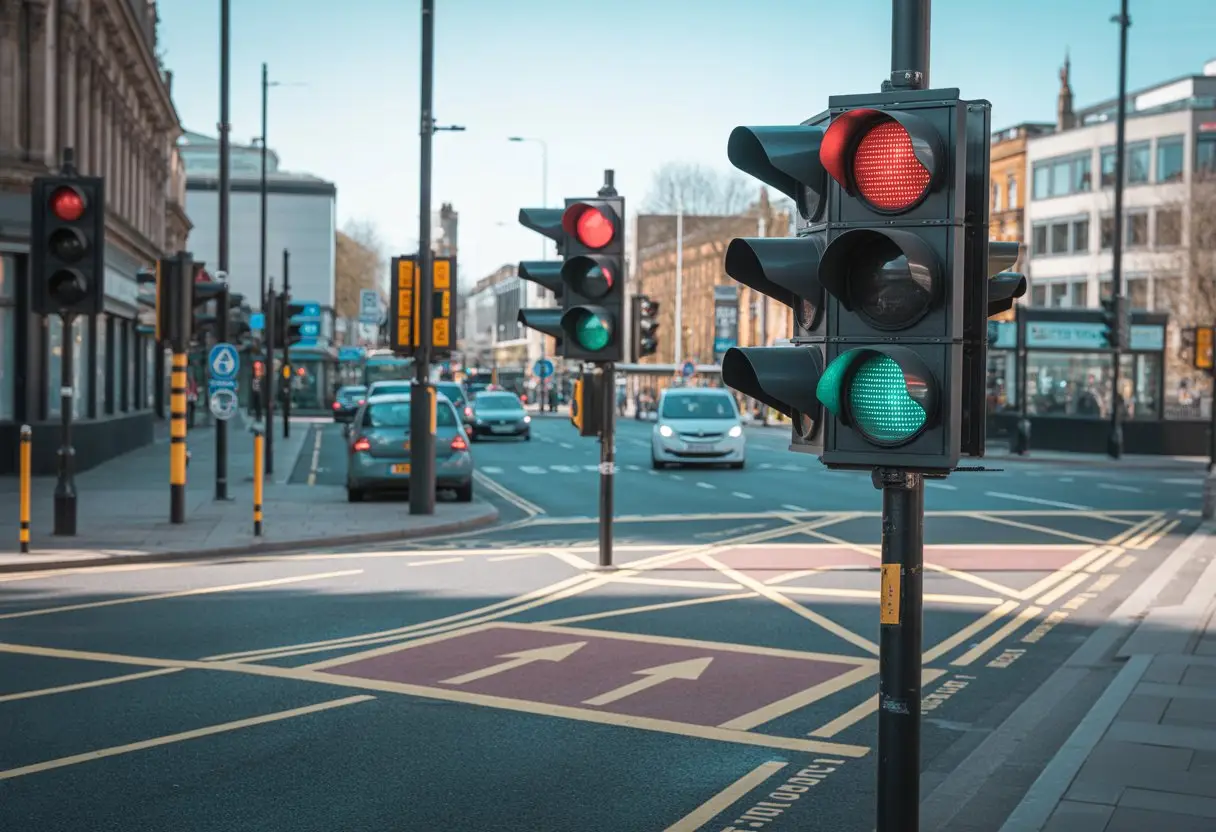
Traffic lights follow a set pattern that all drivers must know, while hand signals from authorised persons and other road users help manage traffic flow in specific situations. Road markings work alongside these signals to guide your movements and show where you can and cannot drive.
Traffic Light Signals Explained
Red means stop and wait behind the stop line. Red and amber together mean stop but prepare to move as the lights are about to change to green. Green means you may go if the way is clear.
Amber means stop unless you’ve already crossed the stop line or you’re so close that pulling up might cause a crash. A flashing amber arrow lets you go in that direction but you must give way to pedestrians crossing. Green arrows show you can go in that direction even if other lights show red.
Traffic lights at level crossings use an amber light that means stop even if it appears after green. Some signals have a green filter arrow that allows you to turn whilst the main light is red. You must always obey the signals even when the road seems clear.
Signals by Authorised Persons
Police officers, traffic officers, and traffic wardens can direct traffic using hand signals that override road signs and traffic lights. When an officer faces you with their arm raised, you must stop. An officer with both arms outstretched means stop if you’re approaching from the side.
An officer waving you on means proceed in the direction shown but watch for other road users. Traffic officers wear high-visibility clothing and have authority to stop vehicles and direct traffic on motorways and some A roads. You must follow their signals just as you would follow police directions.
School crossing patrols also have legal authority to stop traffic. When they display a stop sign, you must stop and wait until all pedestrians have crossed safely.
Signals to Other Road Users
You signal to tell other drivers, cyclists, and pedestrians what you plan to do. Use your indicators to show you’re turning left or right or changing lanes. Cancel your signal after completing the manoeuvre.
Brake lights warn others you’re slowing down or stopping. Hazard warning lights show other road users your vehicle is causing a temporary obstruction. Use them when you’ve broken down or when you need to slow suddenly on a motorway because of danger ahead.
Arm signals provide backup when indicators might not be seen. Extend your right arm straight out to signal a right turn. Move your right arm in a circular motion to signal you’re slowing down or stopping. These signals help motorcyclists and cyclists who might not have electric indicators.
Crucial Road Signs and Their Specific Meanings
Knowing the right road signs can mean the difference between passing and failing your theory test. These signs tell you about road priorities, what actions are forbidden, where pedestrians and cyclists have special rights, and how to navigate motorways safely.
Priority and Restriction Signs
Priority signs tell you who has the right to go first at junctions and crossings. The give way sign is an upside-down triangle with a red border. You must stop and let traffic on the major road pass before you proceed.
The stop sign is octagonal and red with white text. You must come to a complete stop at the line and check both directions before moving forward. These are different from give way signs because stopping is mandatory.
Restriction signs control how fast you can drive and which vehicles can use certain roads. Circular signs with red borders show restrictions you must follow. A white circle with a red border and a number inside sets the maximum speed limit for that road.
Minimum speed signs use blue circles with white numbers. Lane restriction signs appear on motorways and busy roads to show which vehicles can use specific lanes.
Prohibited Manoeuvres
Prohibition signs are circular with red borders and tell you what actions are forbidden. The no entry sign is a red circle with a white horizontal bar across the middle. You cannot drive into a road displaying this sign.
No overtaking signs show two cars side by side within a red circle. You must not pass other vehicles when you see this sign. The no u-turn sign displays a u-turn arrow with a red line through it, meaning you cannot turn your vehicle around to face the opposite direction.
No stopping signs are blue circles with a red border and a red diagonal cross. You cannot stop your vehicle at any time in these areas, even to drop off passengers. Some signs combine symbols to show multiple restrictions at once.
Pedestrian and Cycle Facilities
Pedestrian crossing signs warn you about areas where people cross the road. Warning signs are triangular with red borders and show a person walking. You must be ready to stop and give way to pedestrians at these crossings.
Blue circular signs with white symbols show routes that cyclists and pedestrians must use. A blue circle with a bicycle symbol means the path is for cycles only. When the sign shows both a pedestrian and cycle symbol side by side, both can use the route.
Shared use paths have signs showing pedestrians and cyclists separated by a vertical line. Each group should stay on their designated side of the path.
Motorways, Service Areas, and Diversion Routes
Motorway signs use blue backgrounds to distinguish them from other roads. They show junction numbers, distances to destinations, and which lanes lead to specific exits. White text on blue backgrounds indicates you’re on a motorway route.
Motorway service area signs appear 1 mile before the exit and use a blue background with white text and symbols. These signs show available facilities like fuel, food, and toilets. The signs help you plan rest stops during long journeys.
Diversion route signs appear when roads are closed or blocked. They use yellow backgrounds with black symbols or letters to mark temporary alternative routes. Following these signs helps you avoid closed sections and reach your destination through a different path.
No through road signs warn that a street doesn’t connect to another road. These are rectangular signs with a symbol showing a horizontal line blocking a vertical road.
Additional Markings and Vehicle Information
Certain vehicles require specific markings by law, and recognizing speed limit signs—including the national speed limit—is essential for safe and legal driving.
Vehicle Markings and Hazardous Loads
Large vehicles and those carrying dangerous goods must display specific markings. Commercial vehicles or combinations longer than 13 metres must have vertical reflective markings, whilst these are optional for vehicles between 11 and 13 metres. You’ll see red and white striped panels on the back and sides of these vehicles.
Builders’ skips placed in the road also require these vertical markings for visibility. Tank vehicles transporting dangerous goods must display hazard warning plates that show what type of material they’re carrying. These plates use colour codes and symbols to identify the specific hazard.
When you spot these vehicle markings on the road, give these vehicles extra space. They may need more time to manoeuvre, and the hazard plates warn you about potential dangers if an accident occurs.
Understanding National Speed Limits
The national speed limit sign is a white circle with a single black diagonal stripe. This sign doesn’t show a number because the actual limit depends on the type of road and your vehicle.
On single carriageways, the national speed limit is 60 mph for cars and motorcycles. On dual carriageways and motorways, it increases to 70 mph for these vehicles. Different limits apply to larger vehicles—lorries and buses face lower maximum speeds.
You must know these limits because exceeding them results in penalties, even though the sign doesn’t display a specific number. If you see signs showing actual numbers like 30, 40, or 50, those override the national speed limit.
Frequently Asked Questions
Understanding road markings like box junctions and zigzag lines is essential, and you’ll need to score at least 43 out of 50 on the multiple-choice section and 44 out of 75 on hazard perception to pass. The Highway Code’s rules on speed limits, right of way, and traffic signs form the foundation of what you need to know.
Which road markings are crucial to understand for the UK theory test?
Box junctions require you to only enter when your exit is clear. The yellow criss-cross pattern marks these areas at busy intersections.
White zigzag lines appear near pedestrian crossings. You cannot park or overtake in these zones. Yellow zigzag lines mark school crossing areas with similar restrictions.
Broken white lines in the centre of the road indicate lanes, whilst solid white lines mean you cannot cross or overtake unless it’s safe and you’re passing a stationary vehicle. Double white lines with a solid line on your side mean no crossing at all.
What is the passing score required for the UK theory test?
You need to score 43 out of 50 on the multiple-choice section. This means you can only get 7 questions wrong.
The hazard perception test requires 44 out of 75 points. You must pass both sections on the same day to receive your theory test certificate.
Each section operates independently. Failing one means you’ve failed the entire test, even if you passed the other part.
If you’re unsure whether you’re ready, find out what is a mock driving test and how sitting one can help you gauge your readiness before the real thing.
Can you provide effective study techniques for mastering the hazard perception section?
Watch the clips carefully and click once when you spot a potential hazard developing. Clicking too early or too late reduces your score, and clicking multiple times in a pattern flags the system as cheating.
Focus on hazards that require you to change speed or direction. Parked cars aren’t hazards unless someone opens a door or a pedestrian steps out from between them.
Practice with official DVSA clips to understand the timing system. The earlier you spot a developing hazard, the more points you receive, with a maximum of 5 points per clip. For a full breakdown of strategies, see our hazard perception test tips.
What are the critical components of the Highway Code to focus on for the theory exam?
Speed limits for different road types and vehicle categories appear frequently on the test. Motorways have a 70 mph limit for cars, whilst built-up areas typically restrict you to 30 mph unless signs indicate otherwise.
Right of way rules at roundabouts, junctions, and pedestrian crossings form another major area. You must give way to traffic from your right at roundabouts and to pedestrians who have started crossing.
Stopping distances increase with speed and vary based on weather conditions. At 70 mph in good conditions, your total stopping distance reaches 96 metres or about 24 car lengths.
Traffic signs and their meanings make up a substantial portion of test questions. Circular signs give orders, triangular signs warn you of hazards ahead, and rectangular signs provide information.
How often do the questions in the UK theory test get updated?
The DVSA reviews and updates theory test questions regularly throughout the year. Changes reflect new road safety research, updated Highway Code rules, and feedback from driving instructors.
You should use the most current study materials available. Older resources might not include recent rule changes or new question formats.
The official DVSA learning materials always contain the most accurate and up-to-date information. Third-party resources can help with practice, but verify they reflect current standards.
What categories of road and traffic signs should I concentrate on learning for the test?
Warning signs use red triangles to alert you to hazards ahead. These include signs for sharp bends, junctions, pedestrian crossings, and road works.
Regulatory signs appear as circles and tell you what you must or must not do. Red circles prohibit actions like no entry or no right turn, whilst blue circles give mandatory instructions like turn left ahead or minimum speed limits.
Informational signs come in rectangular shapes. They provide directions, distances to destinations, and details about services available ahead like petrol stations or parking areas.
Road works signs use yellow backgrounds with black borders. These temporary signs warn you of changed conditions, diversions, or workers on the carriageway.
If you want to prepare faster, consider an intensive driving course – it’s the number 1 choice for learners who want to fast track their progress and get test-ready quickly. Once you’ve passed your theory test, the next step is getting behind the wheel. We offer expert driving lessons in Manchester to help you prepare for your practical test with confidence.
Need to book a Driving Lesson?
Contact us Now
Tel: 03334049786